
Last updated October 16, 2026
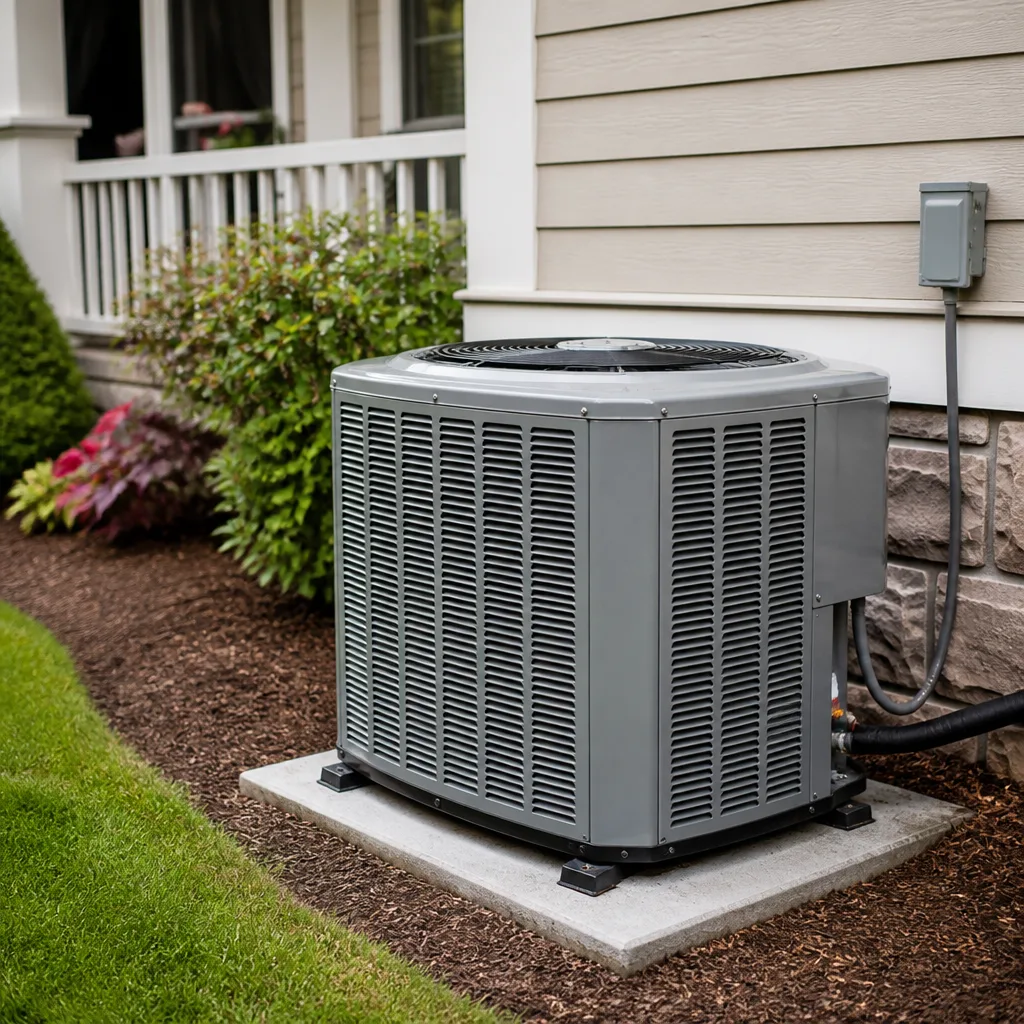 AC repair
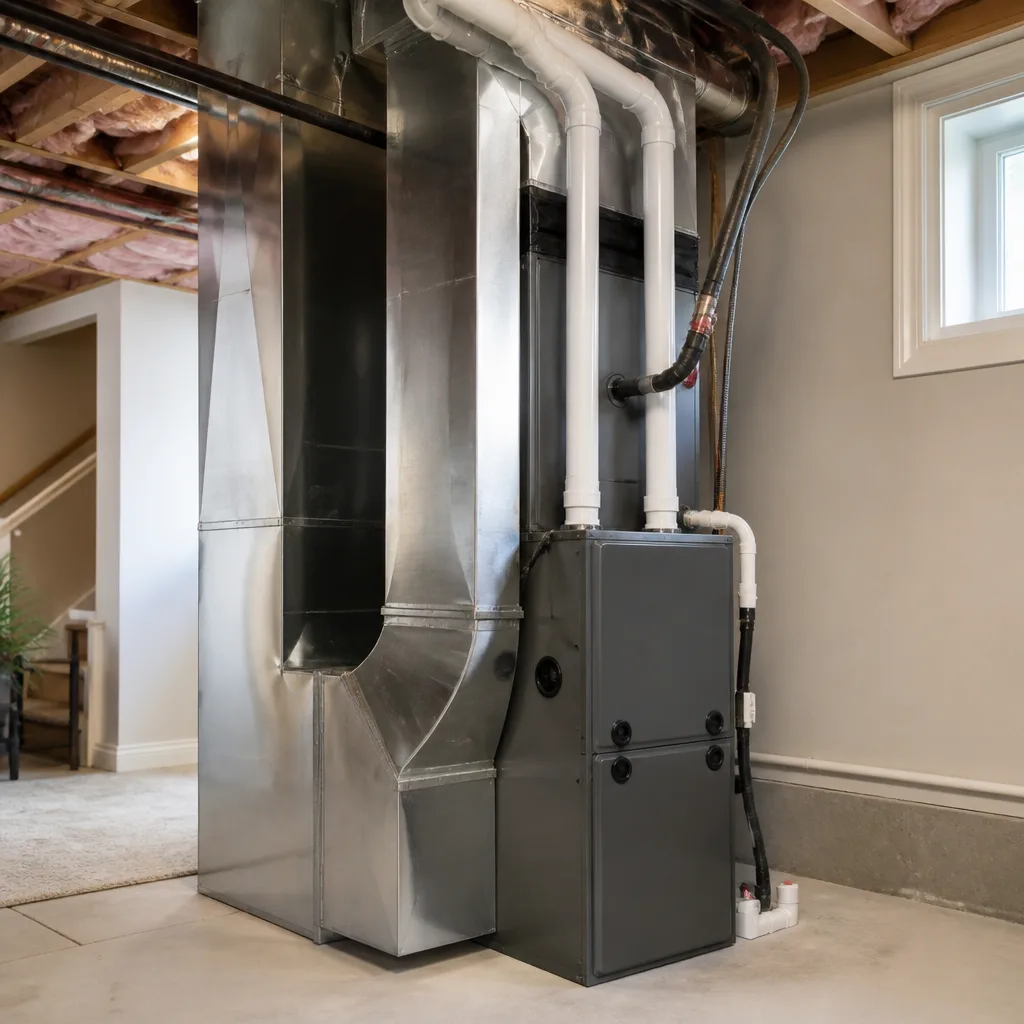 Furnace & heating
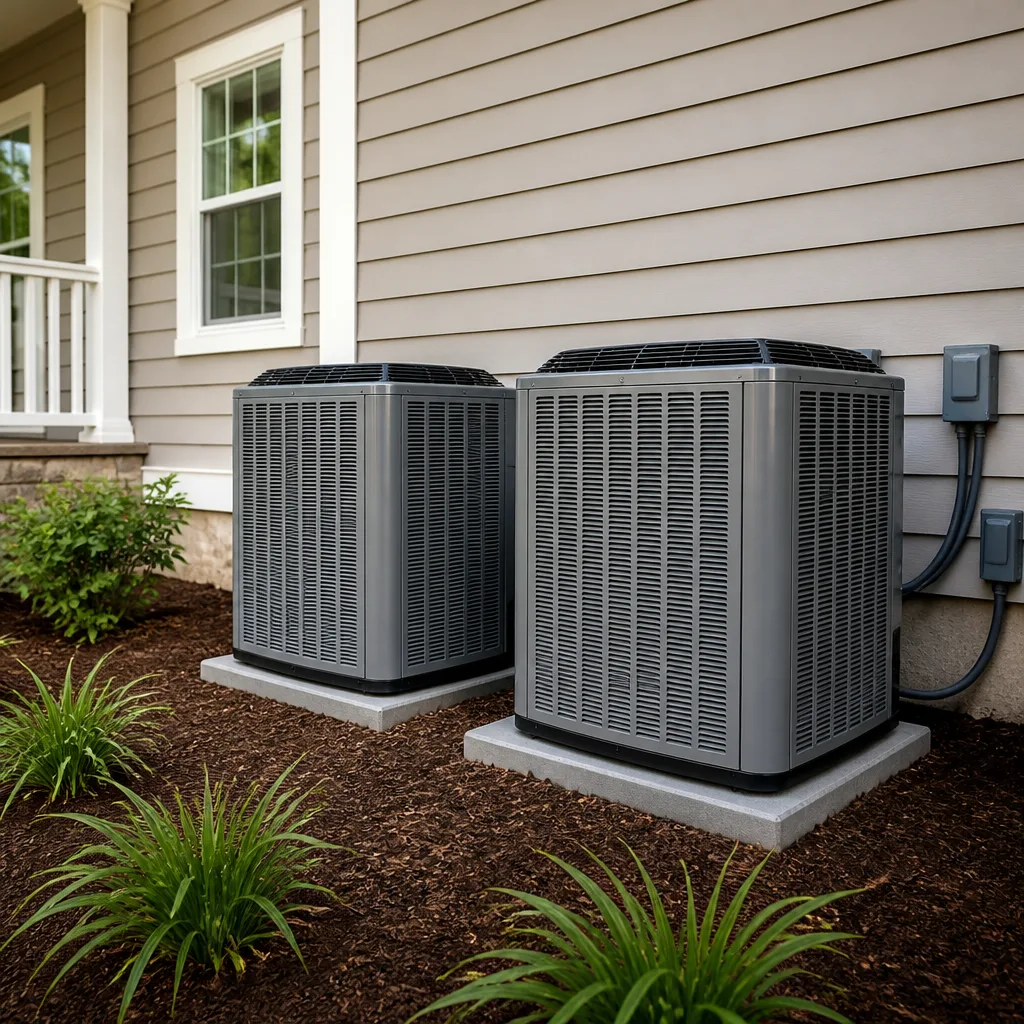 Heat pumps
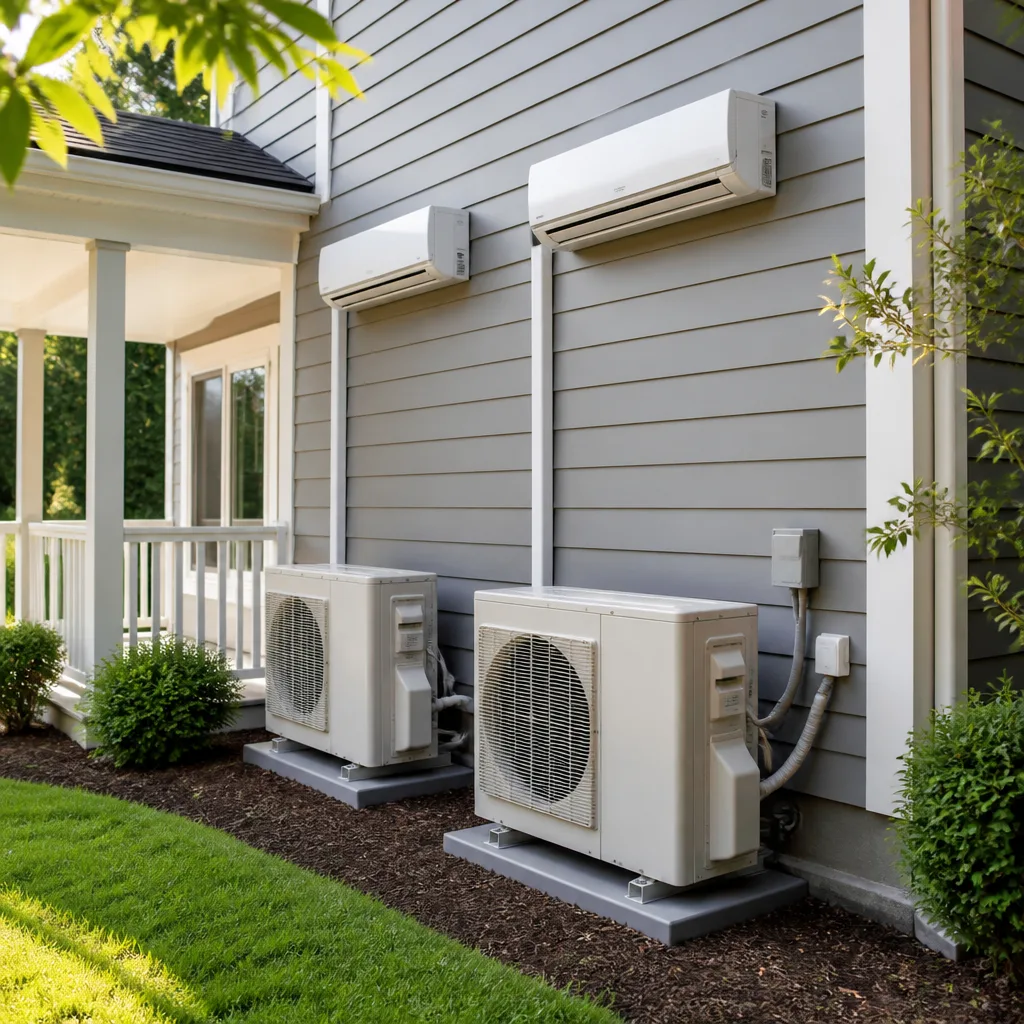 Ductless mini splits
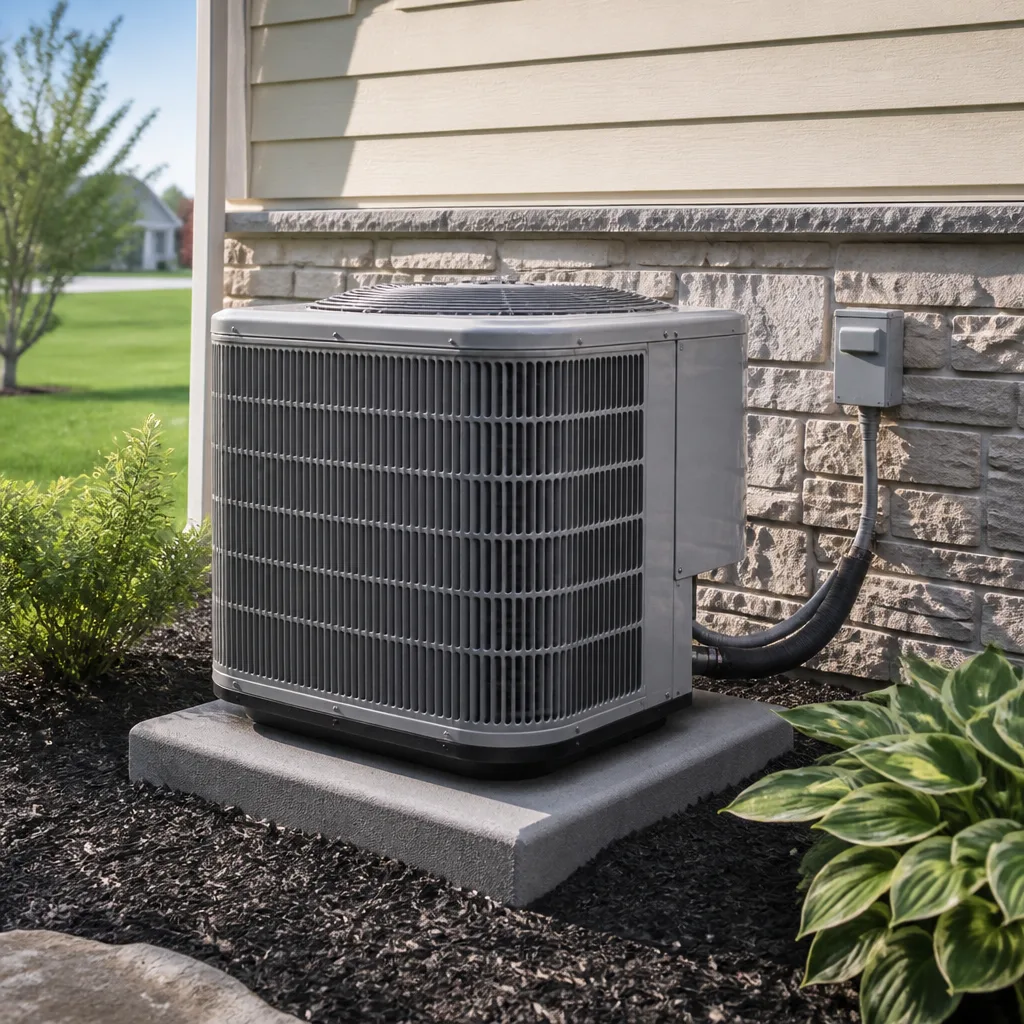 Carrier
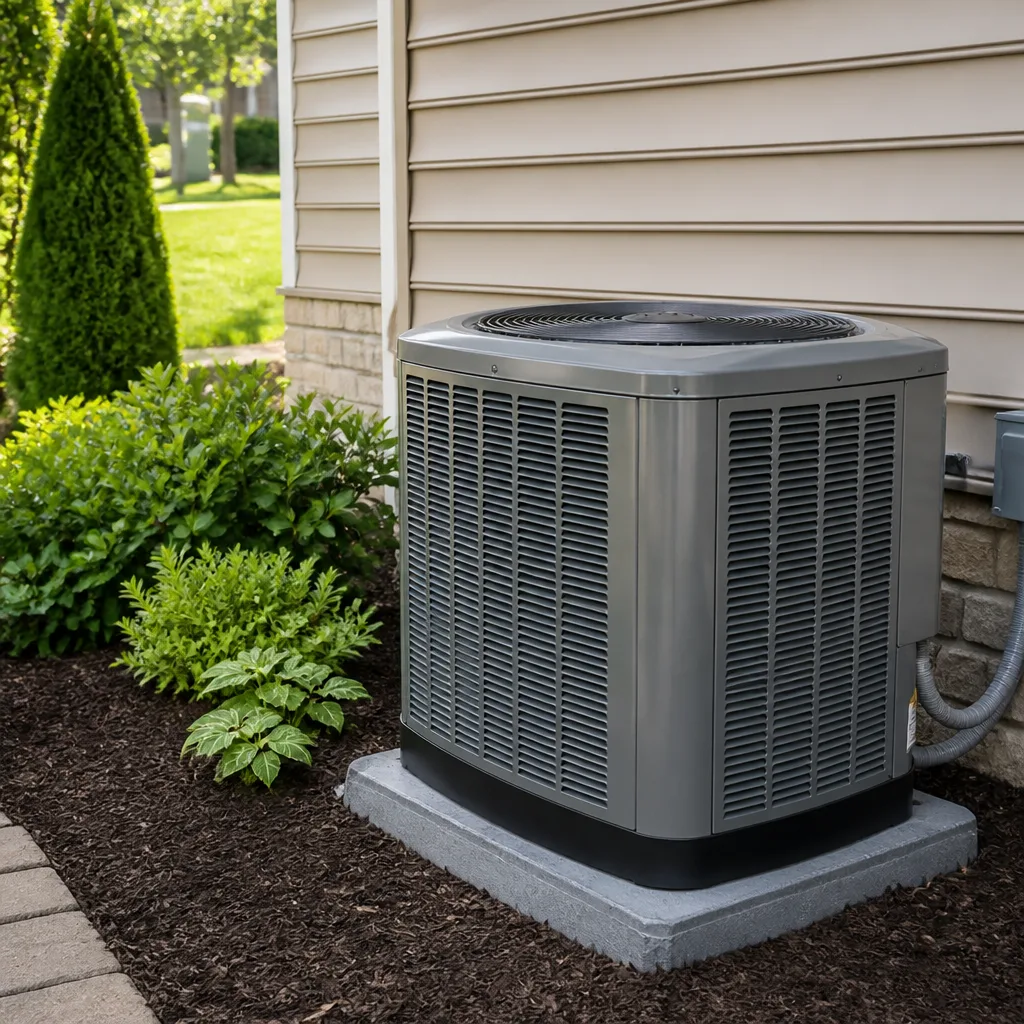 Trane
Trane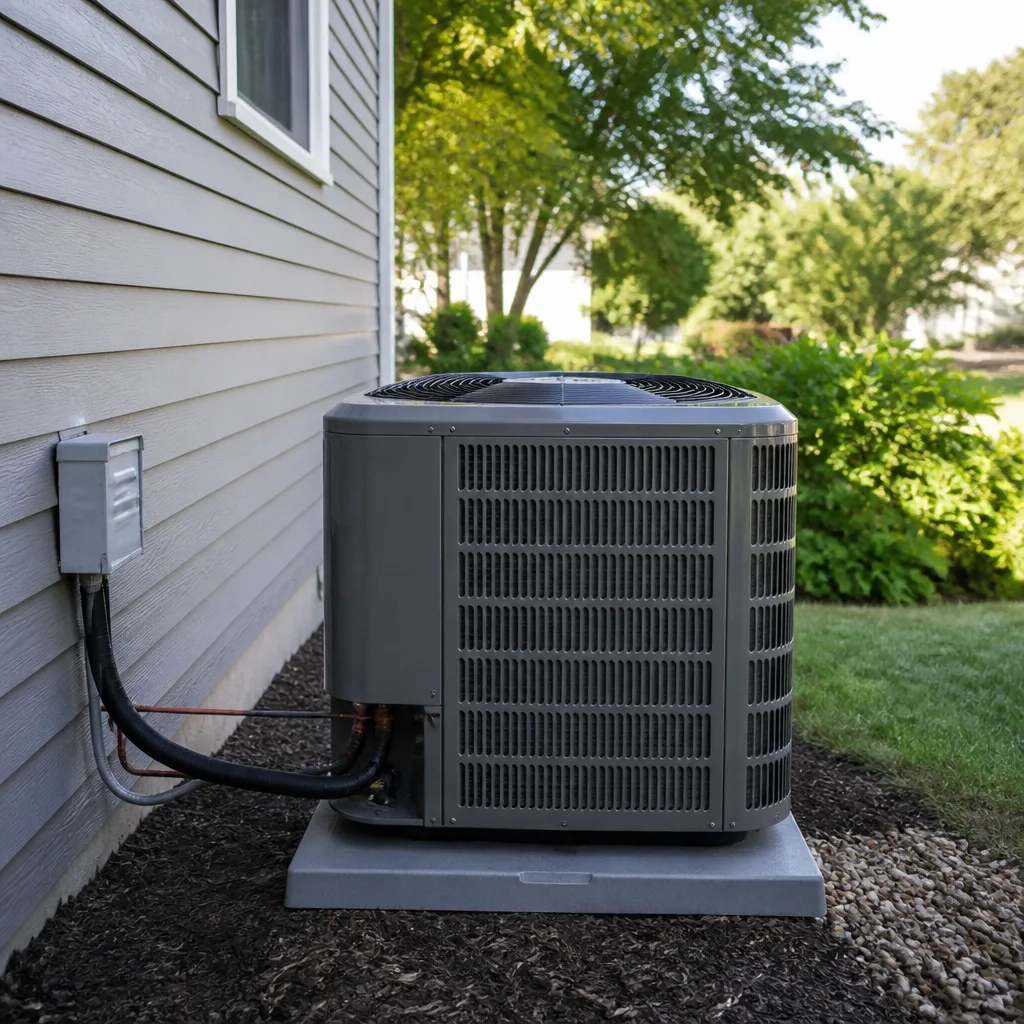 Goodman
Seasonal tune-up and full diagnostic on your Carrier, Trane, or Goodman system - readings shown to you before any repair is proposed
Diagnosis first, numbers second - you approve the repair price before a single part goes in.
Get your free estimateDIY vs Professional HVAC: The Ventura Homeowner’s Decision Guide
Replacing your own AC filter is legal, free, and something every Ventura homeowner should do. Touching the refrigerant lines is a federal crime without an EPA 608 certification, and in California, electrical connections to HVAC equipment legally require a licensed contractor. The line between homeowner maintenance and licensed work is specific and consequential, and almost no DIY guide tells you exactly where it sits. This one does. You’ll learn which tasks California law reserves for licensed C-20 contractors, which DIY shortcuts silently void manufacturer warranties, and the three maintenance jobs coastal Ventura homeowners should genuinely own. For more on permits and legal requirements, see our guide to HVAC Permits, Codes & Inspections in CA: What You Need to Know.
Quick Answer
In Ventura, California, homeowners can legally perform basic HVAC maintenance like filter changes, outdoor unit rinsing, and condensate drain flushing. Anything involving refrigerant, electrical wiring, gas lines, or heat exchanger work requires either an EPA 608 certification or a California C-20 contractor’s license. The practical answer: do the three maintenance tasks yourself, hire a licensed professional for everything else, and never touch refrigerant or electrical connections on your own.
Styles & brands we work with
Table of Contents
- The Legal Boundary: What California Law Actually Says
- The Warranty Void Clause Most Homeowners Miss
- The Three DIY Tasks Ventura Homeowners Should Own
- What YouTube DIY Has Cost Real Homeowners
- How to Use a Professional Tune-Up as a Teaching Visit
- Real Cost Comparison: DIY vs Licensed Repair in Ventura
- Ventura-Specific Factors: Coastal Air, Salt, and Marine Layer
The Legal Boundary: What California Law Actually Says
California Business and Professions Code Section 7026.1 draws the line with unusual clarity. Anyone who performs HVAC work in California for compensation must hold a C-20 Warm-Air Heating, Ventilating and Air-Conditioning Contractor license issued by the Contractors State License Board. That covers installation, repair, and modification of any heating or cooling system. The law does not pretend to be vague about this. A homeowner working on their own residence is exempt from the contractor license requirement, but that exemption ends the moment refrigerant or electrical connections enter the picture.
Refrigerant is governed by a separate federal layer. Section 608 of the Clean Air Act requires EPA certification to purchase, handle, or add refrigerant to any system. Not a suggestion. A federal requirement carrying fines that start around $37,500 per day of violation. When a Ventura homeowner opens a refrigerant line without certification, even accidentally, they have committed a federal violation with real financial consequences. This is not a scare tactic. It is the single most expensive DIY mistake possible in residential HVAC.
Here is the boundary in plain terms:
- Legal for homeowners to do themselves: Replace air filters, rinse the outdoor condenser unit with water, flush the condensate drain line, clean visible debris from around the outdoor unit, check thermostat settings, and visually inspect ductwork for obvious disconnections.
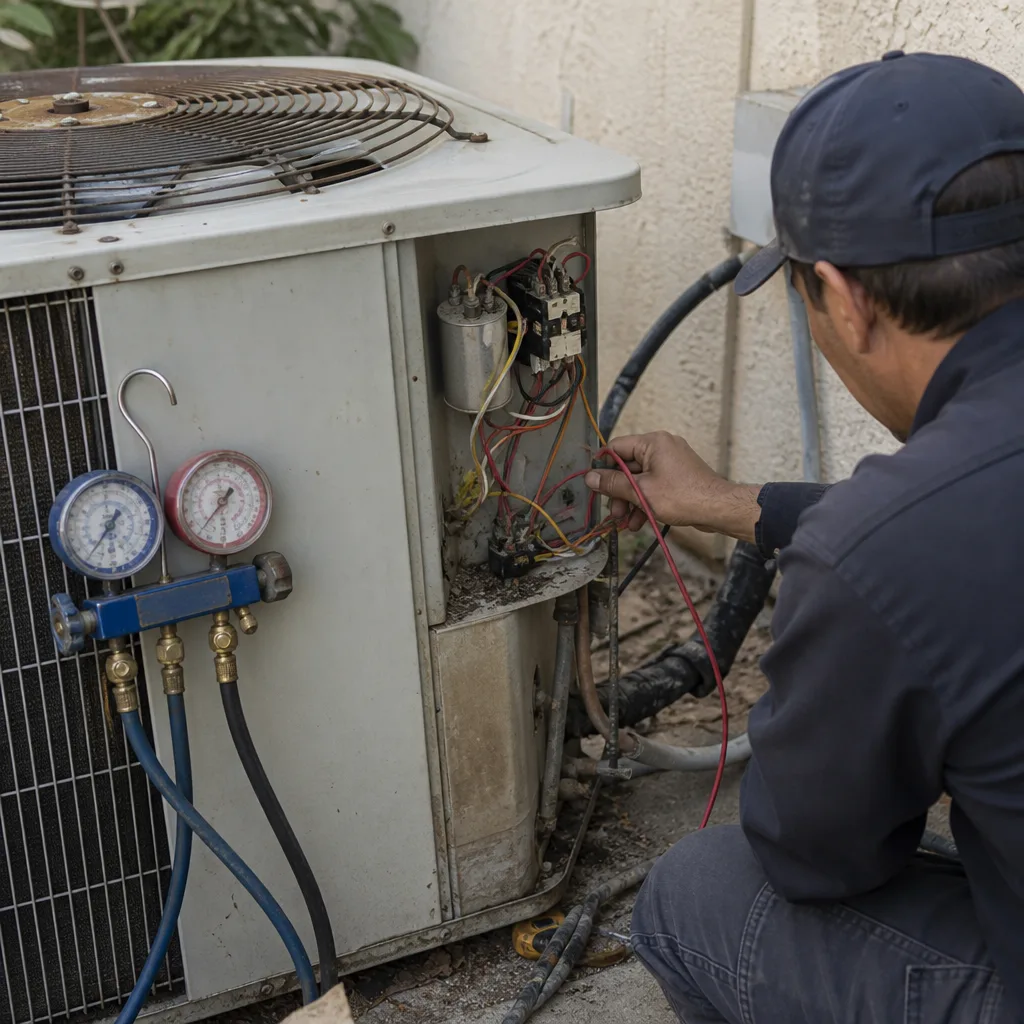
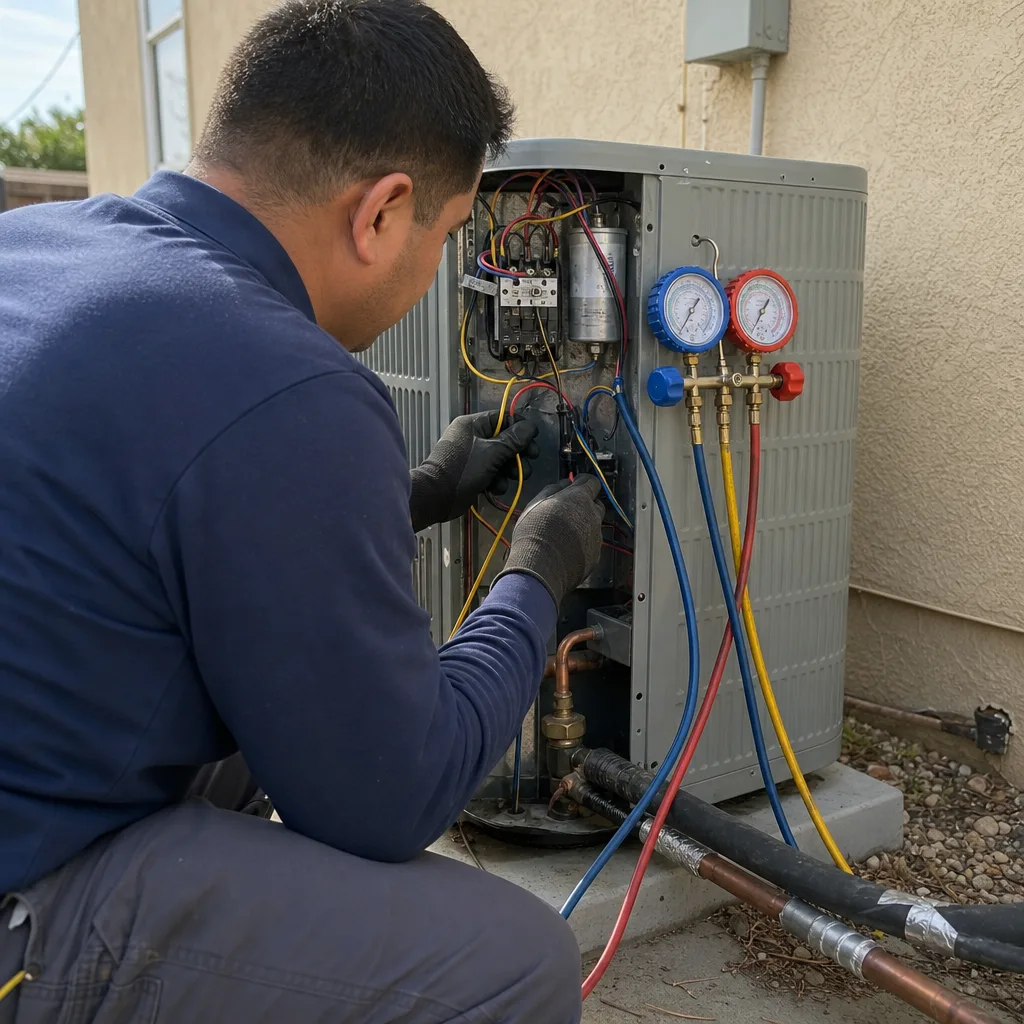
- Requires EPA 608 certification: Adding or removing refrigerant, recovering refrigerant, opening any refrigerant line, using a manifold gauge set, or connecting anything to the service valves on the outdoor unit.
- Requires a California C-20 license: Any electrical connection to HVAC equipment, any gas line connection to a furnace, heat exchanger inspection or replacement, compressor replacement, evaporator coil work, and any repair that involves opening the sealed system of the equipment.
In our experience as an AC repair company in Ventura, the electrical boundary surprises homeowners more than the refrigerant one. People understand refrigerant is dangerous. Fewer realize that connecting a new blower motor or rewiring a contactor without a license technically violates California contractor law, even on your own home. The practical risk is lower than refrigerant work, but the legal exposure exists. Insurance companies know this too, which is the next problem.
The Warranty Void Clause Most Homeowners Miss
Every major HVAC manufacturer writes a warranty clause that most homeowners never read. The language varies by brand, but the substance is consistent. Bryant, American Standard, Carrier, and Trane all state that warranty coverage applies only when the equipment is installed and serviced by a licensed professional. Some go further and require proof of professional installation for the warranty to activate at all. A homeowner who opens the equipment cabinet, modifies wiring, or attempts a repair has often voided the remainder of a 10-year parts warranty without knowing it.
The specific clause is usually titled “Warranty Limitations” or “Exclusions.” Look for phrases like “damage resulting from unauthorized repairs,” “alteration by unqualified persons,” or “failure to maintain as specified.” Those phrases are the tripwires. A Carrier furnace with seven years of warranty remaining, for example, loses all of it the moment a homeowner replaces a limit switch without documentation. A Trane heat pump compressor that fails after a DIY capacitor replacement may be denied coverage because the manufacturer cannot verify the capacitor installation did not cause the compressor failure.
What the warranty actually covers, in plain language:
- Parts warranty (typically 5-10 years): The manufacturer replaces defective parts at no cost, but labor is almost always excluded. The part ships free. You still pay a licensed contractor to install it.
- Compressor warranty (sometimes extended to 10-12 years): Same structure. Free compressor, paid labor. A compressor replacement typically runs $1,800 to $3,400 in Ventura even with the part free, because it involves refrigerant recovery and replacement.
- Heat exchanger warranty (often 20 years to lifetime): The part itself is covered, but the labor to access it, which often requires significant disassembly, is not. That labor routinely runs $600 to $1,200.
The warranty question is financial, not philosophical. A homeowner who saves $300 on a DIY repair and voids a warranty that would have covered a $900 part has made a poor trade. That math is worth doing before any tool comes out of the drawer.
The Three DIY Tasks Ventura Homeowners Should Own
There are three maintenance jobs that every Ventura homeowner should perform themselves. They are legal, they are simple, they require no special tools beyond what most homes already have, and they genuinely extend equipment life. Owning these tasks also means you arrive at every professional service call informed enough to know whether the visit was necessary.
1. The Outdoor Unit Rinse
Ventura’s coastal air carries salt and fine dust that settle on condenser coils. A layer of grime only a few millimeters thick reduces heat transfer enough to raise cooling costs and shorten compressor life. The fix takes 20 minutes.
- Turn off the breaker for the AC unit at your electrical panel.
- Remove any large debris by hand: leaves, grass clippings, cobwebs.
- Use a garden hose with a standard spray nozzle set to a gentle stream. Never use a pressure washer; it bends the aluminum fins and reduces airflow permanently.
- Spray from the inside outward if your unit has a removable top. If not, spray down and across the fins from the outside.
- Let the unit dry for 30 minutes before restoring power.
Do this twice a year in Ventura: once in March before cooling season, once in October before heating season. In neighborhoods like Midtown and the College Area, where landscaping dust is more common than beach salt, the fins clog faster and may need quarterly rinsing.
2. The Filter Replacement Schedule
Filter replacement is the highest-leverage maintenance task in all of residential HVAC. A clogged filter forces the blower motor to work harder, reduces airflow across the evaporator coil, and can cause the coil to freeze. The fix costs $8 to $25 and takes 90 seconds.
Set a calendar reminder. For 1-inch filters, replace every 30 to 60 days during peak heating and cooling seasons. For 4-inch media filters, every 6 to 12 months. Homes in Ventura’s older neighborhoods near downtown often have dust from vintage ductwork, so err on the shorter interval. Write the installation date on the filter frame with a marker. That habit ends the guessing game.
3. The Condensate Drain Flush
Your AC produces gallons of condensation every summer day. That water drains through a PVC pipe that can clog with algae and sediment. A clogged drain sends water back into the unit, onto the floor, or into walls. The flush is simple.
- Locate the condensate drain line near the indoor air handler. It is usually a white PVC pipe with an open tee fitting.
- Pour one cup of white vinegar into the tee. Vinegar kills algae without damaging the pipe.
- Wait 30 minutes, then flush with one cup of warm water.
- Check the outdoor drain outlet to confirm water flows through. If it does not, the line is blocked, and you need professional help with a wet-dry vac or line clearing tool.
Do this monthly during cooling season. It is the cheapest insurance against water damage you will ever buy. For more involved maintenance, our AC maintenance service in Ventura includes drain line clearing as part of every tune-up.
What YouTube DIY Has Cost Real Homeowners
YouTube makes every repair look simple because the person filming has already done it ten times. What the video never shows is what happens when the part is not identical, when the screw strips, when the wire color does not match, or when the unit is 15 years old and corroded in ways the video does not anticipate. Here is what that gap actually costs.
The refrigerant release fine. A Ventura homeowner attempted to replace a leaking Schrader valve core on his own system after watching a video. He opened the line thinking the system was empty. It was not. The remaining refrigerant vented to atmosphere. The fine, his repair bill, and the replacement refrigerant together exceeded $4,000. The professional repair would have cost $300.
The voided insurance claim. A homeowner replaced a furnace control board without a license. Two months later, the furnace emitted carbon monoxide and the family called the fire department. When the homeowner filed an insurance claim for the furnace damage and remediation, the insurer denied it. The policy’s “unlicensed work” exclusion applied. The denial letter cited California Code of Regulations Title 10, Section 2695.183. The total loss: $11,000 in furnace replacement and duct cleaning, all out of pocket.
The compressor kill. A DIY homeowner installed the wrong capacitor on his outdoor unit. The capacitor was close, but not exact. The compressor started against incorrect phase timing, ran for six weeks, and died. A licensed furnace repair company in Ventura quoted $2,800 to replace the compressor. The original capacitor replacement by a professional would have cost $180.
The damaged coil fins. A homeowner used a pressure washer on his condenser coil, following a video that showed exactly that. The video did not mention that the water pressure bent every fin on one side of the unit. Airflow dropped by roughly 40 percent. The unit ran hotter, cooled less, and eventually tripped its high-pressure switch repeatedly. Fixing the fins plus the resulting compressor strain came to $1,700.
These are not rare edge cases. We see them in Ventura every season. The pattern is always the same: the repair looked simple, the diagnosis was wrong, and the secondary damage cost five to fifteen times what the original professional repair would have.
How to Use a Professional Tune-Up as a Teaching Visit
Every professional tune-up is an opportunity to build your own monitoring capability between service calls. A good technician will answer questions. A great technician will show you what to watch for. Here is how to extract maximum value from a maintenance visit.
Ask to see the capacitor reading. The capacitor is the most common failure point on outdoor units. Have the technician show you the measured value versus the rated value on the capacitor label. If the measured value is more than 10 percent below the rating, it is aging out. Knowing what a healthy capacitor looks like helps you understand future recommendations.
Ask where the condensate drain line exits the house. Many homeowners do not know where their drain terminates. Once you know, you can watch that spot for water during cooling season. No water means a clog is forming. Water inside the house means it has already formed.
Ask to see the temperature split. The technician measures the temperature of the air entering the return and the air leaving the supply. A healthy split is 15 to 22 degrees Fahrenheit. Ask what your system measured. That becomes your baseline. Next year, if your system measures 12 degrees, you know something changed before the technician tells you.
Ask about the evaporator coil condition. The indoor coil is hard to see. The technician will inspect it during a tune-up. Ask for an honest assessment: is it clean, dirty, or showing corrosion? In Ventura’s coastal air, coils corrode faster than inland. Knowing your coil is at moderate corrosion helps you plan for replacement before it leaks refrigerant.
One more recommendation: brand-name equipment ages differently. A Carrier system in Ventura’s coastal zone will have different corrosion patterns than a Bryant installed further inland in East Ventura. Ask the technician what your specific brand and model are known for. That answer is more useful than any generic maintenance advice.
Real Cost Comparison: DIY vs Licensed Repair in Ventura
Ventura’s HVAC market prices professional work higher than the national average, which makes DIY temptation stronger here than anywhere. Before you decide, review our HVAC Cost Breakdown: The Ventura Homeowner’s Reference for 2026. The comparison below uses real Ventura market ranges for common repairs.
| Repair | DIY Cost | Professional Cost in Ventura | Risk of DIY Failure |
|---|---|---|---|
| Air filter replacement | $8 – $25 | $40 – $90 (if included in tune-up) | None |
| Condensate drain flush | $3 (vinegar) | $75 – $150 (if clogged) | Low, but a full clog needs a pro |
| Outdoor unit rinse | $0 (water) | $80 – $120 (as part of service) | Low unless you use a pressure washer |
| Capacitor replacement | $15 – $40 (part only) | $150 – $300 (parts and labor) | High: wrong capacitor kills compressors |
| Igniter replacement (furnace) | $20 – $50 (part only) | $150 – $300 (parts and labor) | High: gas line proximity is dangerous |
| Refrigerant recharge | Illegal without EPA 608 | $200 – $500 (per pound, including leak check) | Federal fines start at $37,500/day |
| Compressor replacement | Illegal without license | $1,800 – $3,400 (including refrigerant) | Voids registration, warranty, insurance |
| Evaporator coil replacement | Illegal without license | $1,600 – $2,800 (including refrigerant) | Refrigerant handling, warranty void |
The pattern in those numbers is straightforward. The tasks where DIY saves real money are the three maintenance jobs covered earlier. The tasks where DIY looks like savings are the repairs where a failed attempt multiplies the cost. A capacitor replacement that goes wrong can destroy a $1,800 compressor. A refrigerant line opened by mistake triggers federal penalties. The risk-adjusted math almost always favors the professional on repair work.
When we give written estimates in Ventura, every job includes the full price before work starts, so the comparison above is what you should expect to see on a real quote, not a promotional range. Estimates are free, and there is no obligation to proceed.
Ventura-Specific Factors: Coastal Air, Salt, and Marine Layer
Ventura has an HVAC climate unlike inland Southern California cities. The marine layer moderates summer temperatures, which reduces severe cooling demand but increases moisture exposure. The coastal salt air accelerates corrosion on aluminum condenser coils and galvanized steel cabinets. Homes in neighborhoods closer to the beach like Pierpont and the Keys have measurably shorter equipment lifespans than homes in East Ventura or Saticoy, simply because of salt deposition on outdoor units.
What this means for DIY maintenance:
- Coil rinsing matters more here than in Ojai or Camarillo. Salt buildup is heavier within two miles of the ocean. Rinse quarterly if you are in Pierpont, the Keys, or downtown Ventura.
- Rust on the cabinet is cosmetic until it is not. Surface rust is fine. Rust that has pitted through the metal is not. Check the bottom of the outdoor unit, where salt water from rain runoff pools.
- Evaporator coils in coastal humidity grow mold faster. Ventura’s summer marine layer keeps indoor humidity high, which feeds biological growth on the coil. A coil cleaning is a professional job, but watching for musty smells from your vents tells you when it is needed.
- Electrical connections corrode faster near the coast. The contactor and capacitor terminals oxidize faster in salt air. A professional tune-up includes cleaning and tightening these connections, which is not a DIY-friendly job because it involves live electrical components.
Ventura’s building stock also skews older. Many homes in Midtown, the Avenue, and downtown were built before modern energy standards. Their ductwork, electrical panels, and original gas furnaces or wall heaters are often undersized for today’s cooling loads. A licensed technician working on a 1960s Ventura home is dealing with different realities than one working on a new build in the Ventura Hills. Experience with older Ventura housing stock is not optional; it is the difference between a correct diagnosis and a guessing game.
Common Mistakes to Avoid
- Using a pressure washer on condenser coils. This bends the aluminum fins, permanently reducing airflow and heat transfer. A garden hose with a spray nozzle is the only correct tool.
- Running the AC while the outdoor unit is covered or blocked. Homeowners sometimes cover the unit to protect it, forget, and run the system. This trips the high-pressure switch and can damage the compressor. Clear at least 18 inches around all sides.
- Replacing a thermostat without checking system compatibility. Not every smart thermostat works with every system. Wrong wiring can damage the control board or leave heat and cool running simultaneously. If the thermostat has more wires than the old one, call a professional.
- Ignoring water around the indoor unit. Water near the air handler almost always means a clogged condensate drain. Continued operation sends water into the cabinet, where it destroys the control board and the blower motor. Shut the system off and address the drain immediately.
- Believing refrigerant is something you “top off.” Refrigerant is not consumed like gasoline. If it is low, there is a leak. Adding refrigerant without finding and fixing the leak is illegal under EPA regulations and wastes your money.
- Skipping maintenance because the system “seems fine.” HVAC failures are rarely sudden. They are slow declines that become sudden when the capacitor dies, the drain clogs, or the coil freezes. The maintenance visit that catches the decline early is cheaper than the emergency repair that follows the failure.
- Hiring the lowest bidder without verifying licensing. California runs a free license lookup on the CSLB website. Verify the C-20 license, check for workers’ compensation coverage, and confirm the phone number matches the license record. An unlicensed bid is cheaper until something goes wrong, and then it is the most expensive decision you made that year.
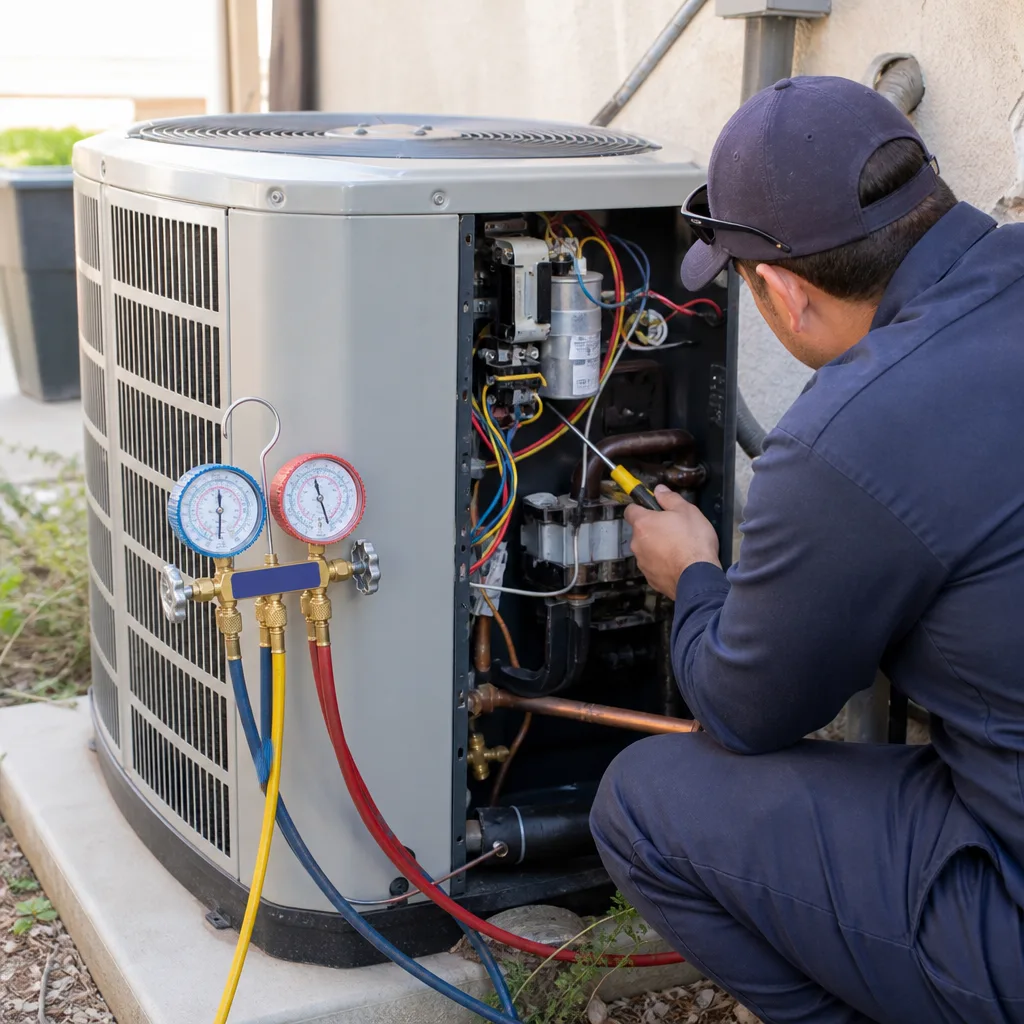
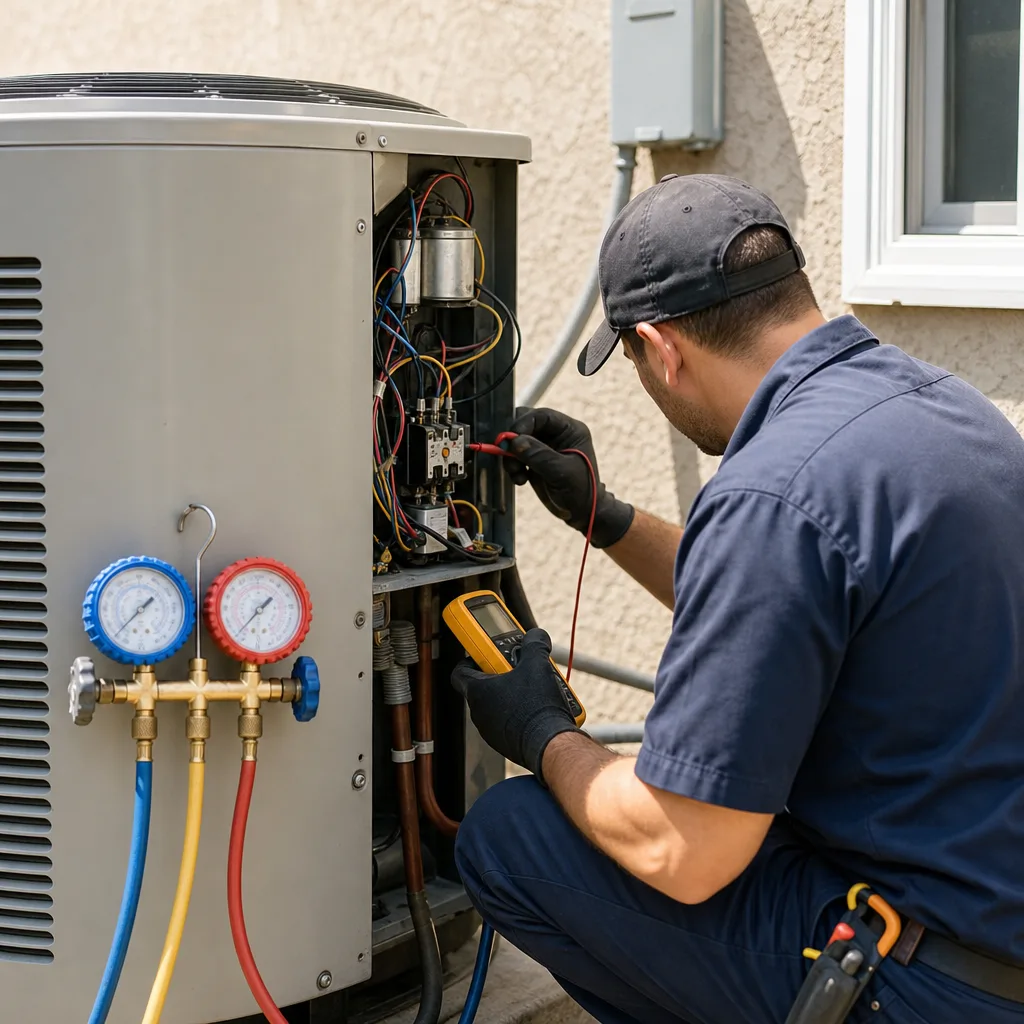
See the difference
 Before
 After
After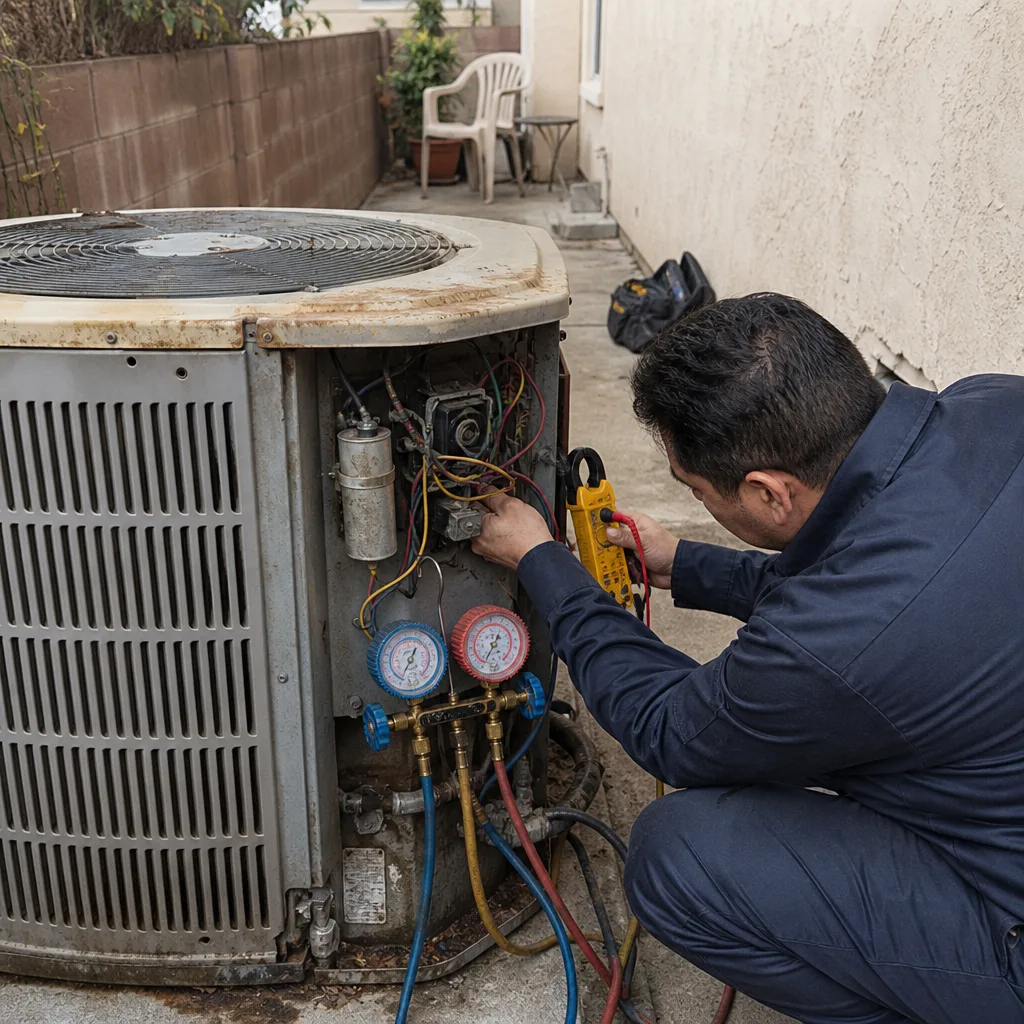 Before
 After
After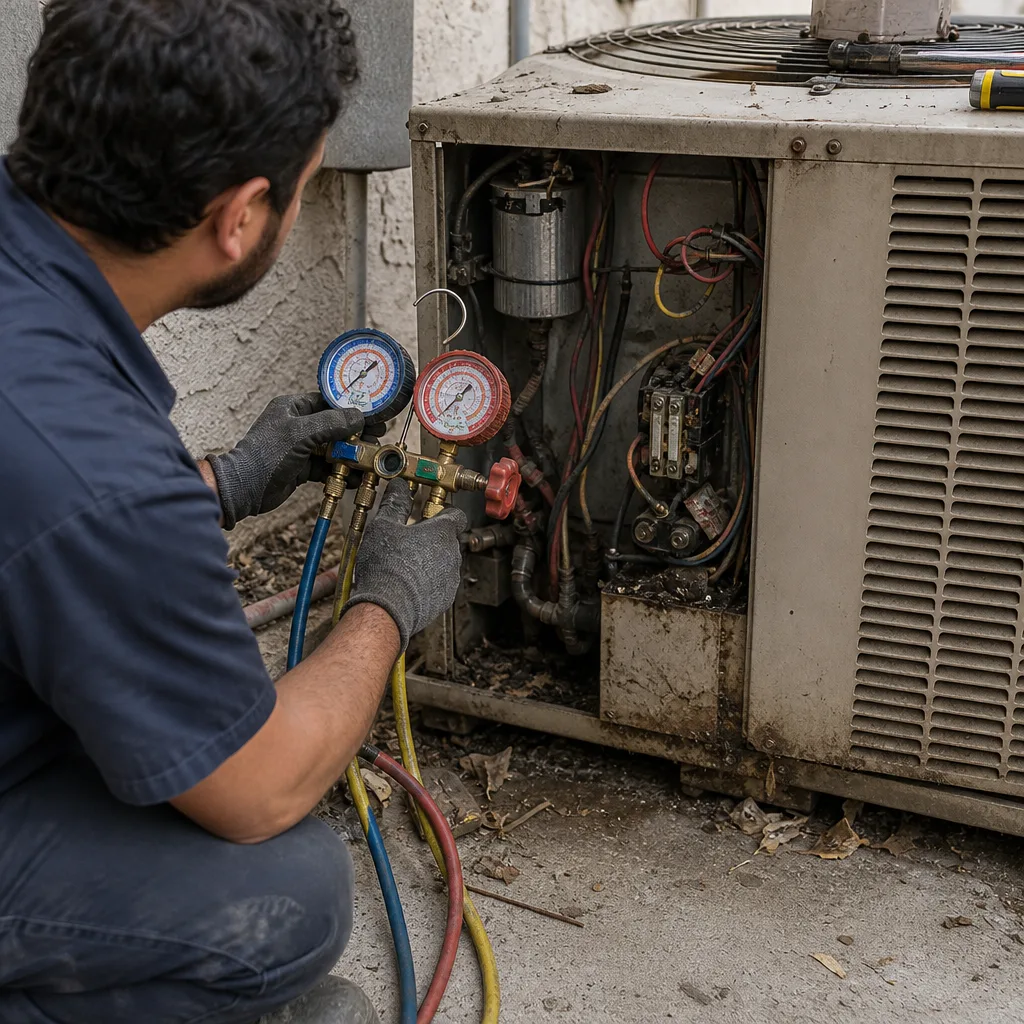 Before
 After
AfterWhen to Call a Professional
Call a licensed HVAC contractor the moment you notice any of these: the system runs but does not cool or heat, the outdoor unit makes a humming noise but the fan does not spin, there is water pooling around the indoor unit, the system trips its breaker repeatedly, you smell anything unusual from the vents (burnt dust, gas, or a sweet chemical smell), or the system is more than 12 years old and has not been tuned up in over a year. Do not open the cabinet. Do not touch the electrical. Do not attempt a repair based on a video. Brandt HVAC Co Ventura offers free estimates in Ventura; call (831) 539-0291 and a licensed technician will give you a written price before any work begins.
Frequently Asked Questions
You can legally perform basic maintenance like filter replacement, coil rinsing, and drain flushing on your own home. You cannot legally touch refrigerant without an EPA 608 certification, and electrical or gas-line work on HVAC equipment requires a California C-20 contractor license. The penalty for refrigerant violations starts around $37,500 per day.
Opening a refrigerant line without EPA certification causes the most expensive single mistake, because it combines federal fines with the cost of refrigerant replacement and system repair. The second is installing the wrong electrical component and destroying a compressor, which runs $1,800 to $3,400 to fix in Ventura.
Replace 1-inch filters every 30 to 60 days during cooling and heating seasons. Ventura’s dust, coastal salt, and older ductwork clog filters faster than inland locations, so err on the shorter interval. Write the installation date on the filter frame to track it.
Yes, in most cases. Major manufacturers like Bryant, Carrier, Trane, and American Standard require professional installation and service for warranty coverage. Modifying wiring, opening sealed system components, or replacing parts without documentation typically voids the remaining warranty on that equipment.
A maintenance tune-up in Ventura typically runs $80 to $180 depending on the system type and what is included. The visit should include coil inspection, capacitor testing, drain line clearing, electrical connection tightening, and a temperature split measurement. Call (831) 539-0291 for Ventura pricing.
At 15 years old in Ventura’s coastal climate, your system is near the end of its life. If the repair exceeds 40 to 50 percent of replacement cost, or if the system uses R-22 refrigerant that is no longer manufactured, replacement is the smarter financial choice. A licensed contractor can run the numbers with you before you commit.
The Bottom Line
The DIY-vs-professional HVAC question resolves to three facts. First, California law and federal EPA regulations have already drawn most of the lines for you: maintenance is yours, refrigerant and electrical work is not. Second, the warranty exposure from DIY repair is real and expensive, often costing more than the repair itself would have. Third, the three maintenance tasks worth owning, filter replacement, outdoor unit rinsing, and drain flushing, deliver genuine savings and teach you to monitor your system. Everything else belongs to a licensed professional. The smart Ventura homeowner does those three jobs faithfully, keeps records, and calls a verified contractor for anything else. Explore more guides & resources to keep your system running efficiently.
Written by Devin Marlowe, Owner at Brandt HVAC Co Ventura home, serving Ventura since 2003.