
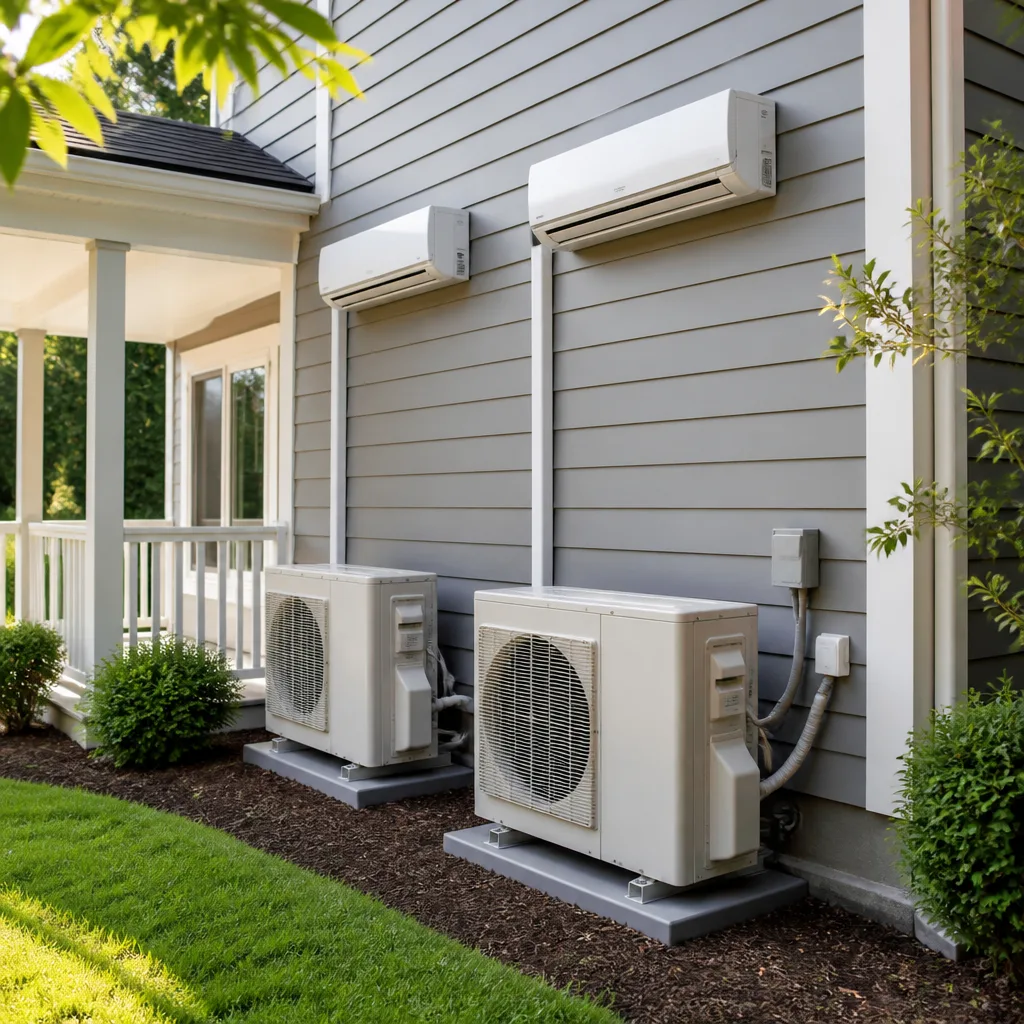
 Ductless mini splits
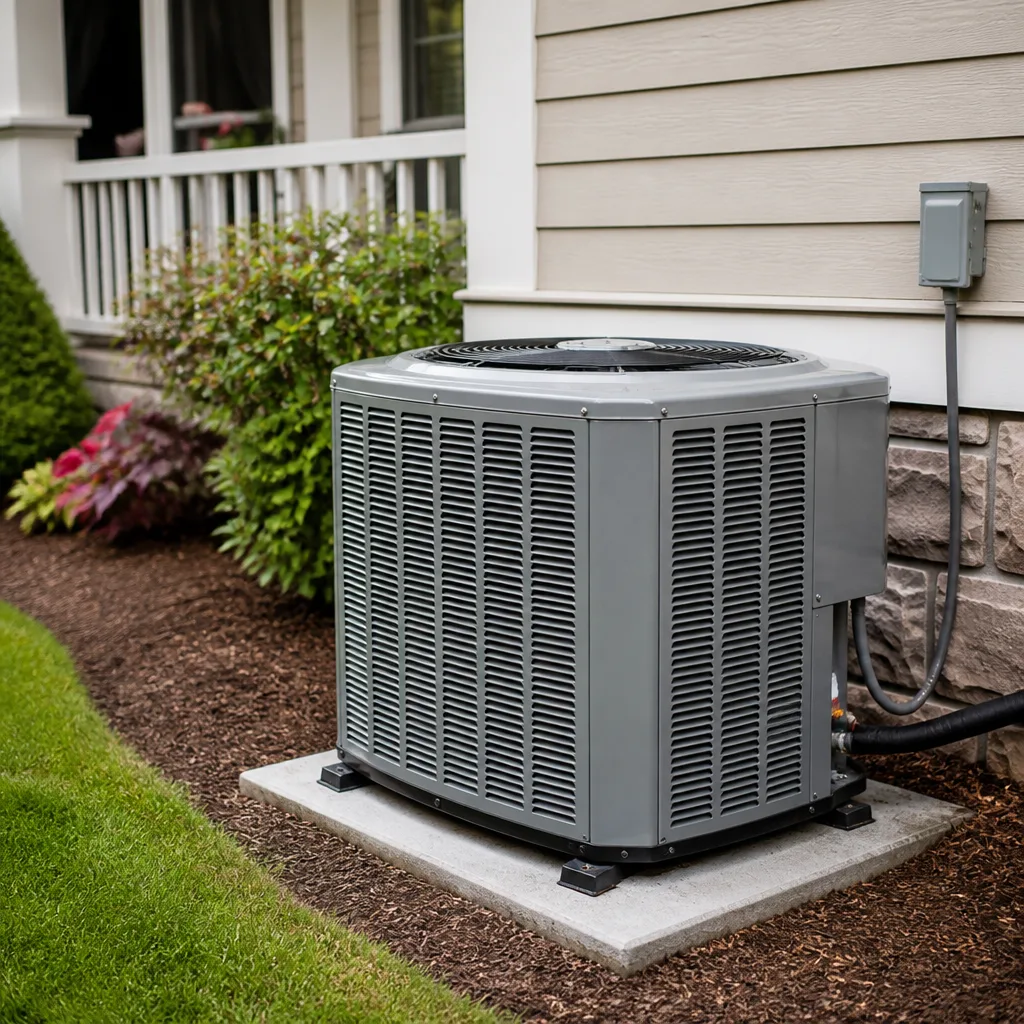 AC repair
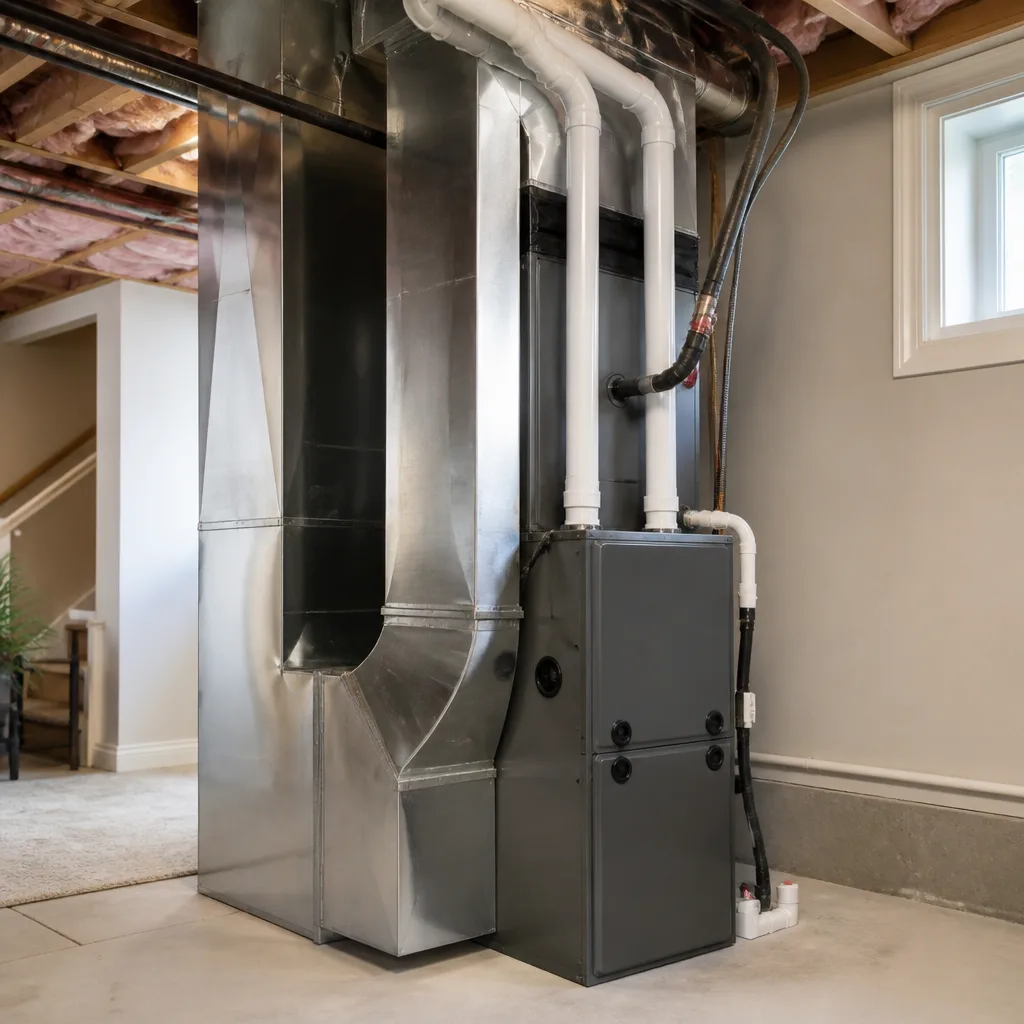 Furnace & heating
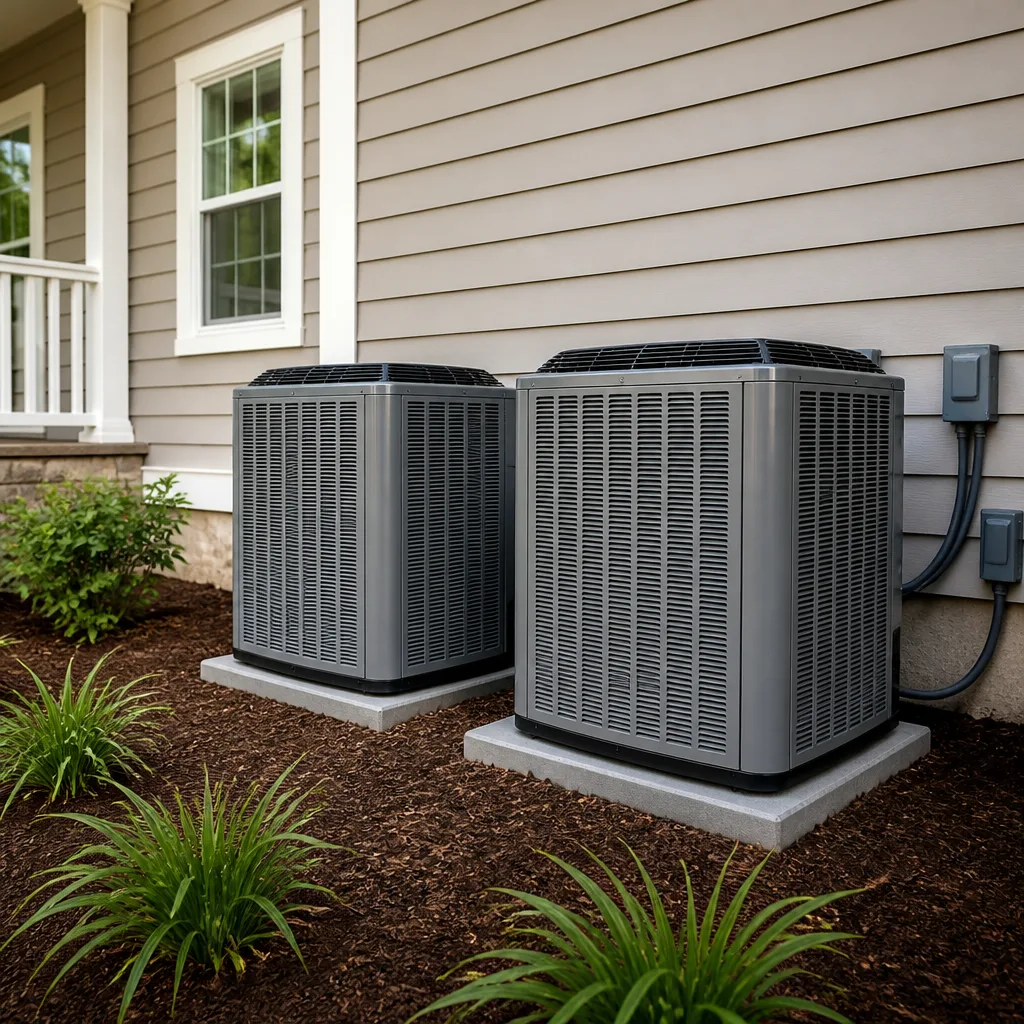 Heat pumps
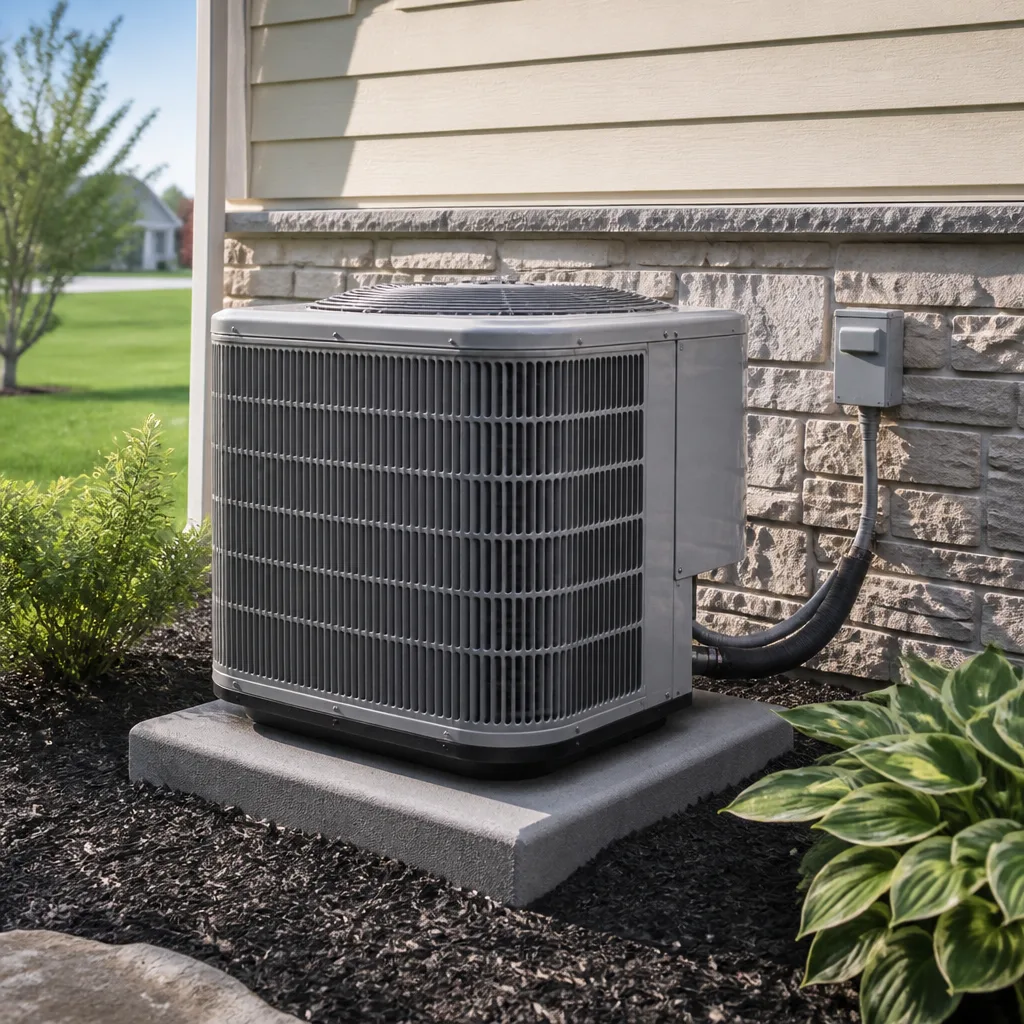 Carrier
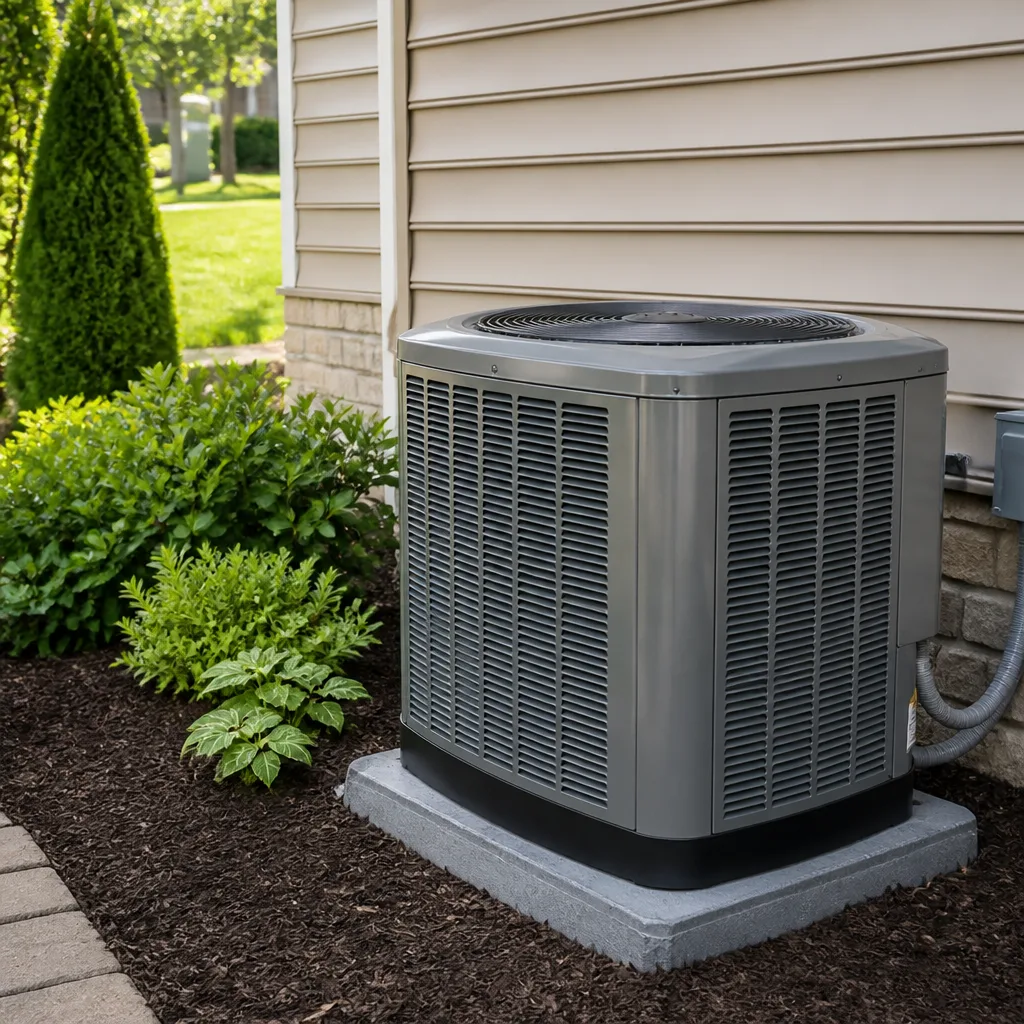 Trane
Trane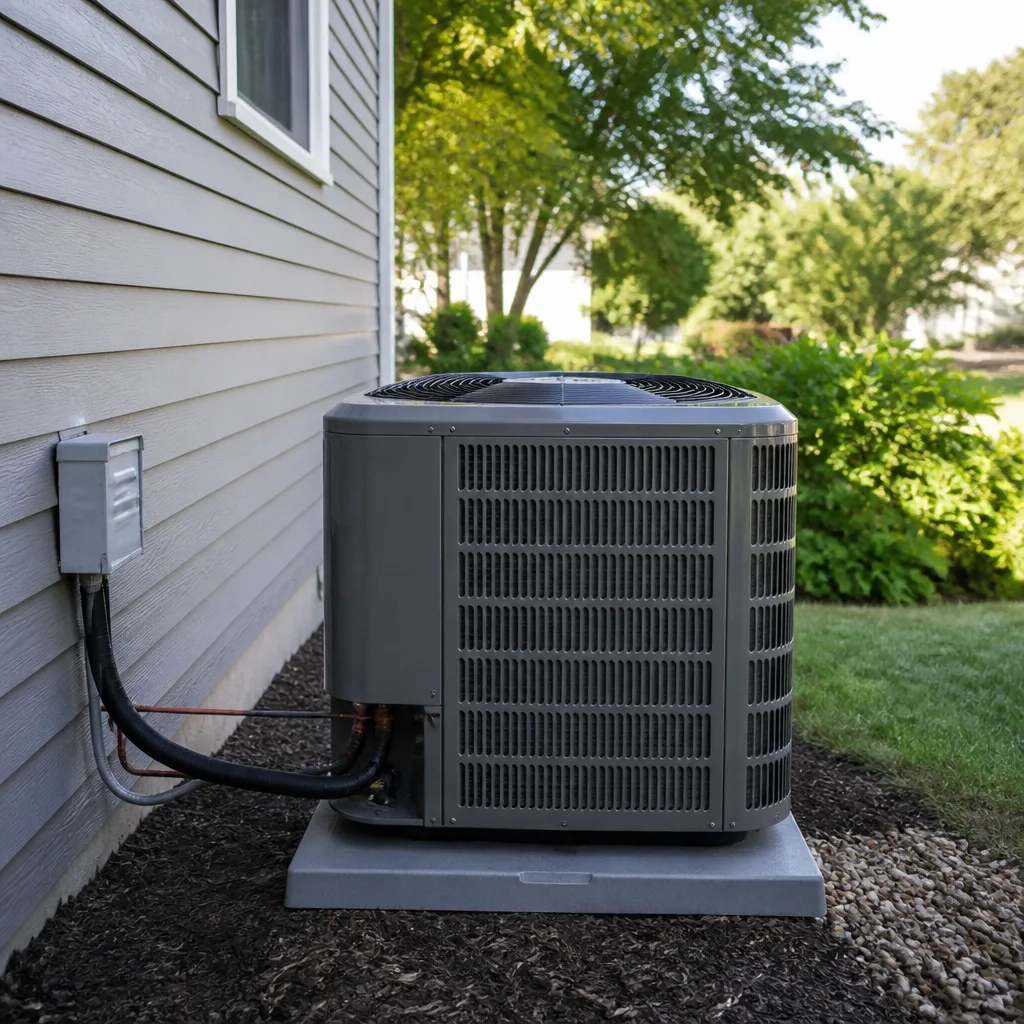 Goodman
Seasonal tune-up and full diagnostic on your Carrier, Trane, or Goodman system - readings shown to you before any repair is proposed
Diagnosis first, numbers second - you approve the repair price before a single part goes in.
Get your free estimateBryant Mini-Split Installation: The Ventura Owner’s Guide
Bryant mini-split installation in Ventura typically runs $3,500 – $7,500 installed, depending on the system size, number of indoor heads, and how much line-set work your home requires. We stock Bryant-compatible components and can usually have a technician at your door within 24 hours for a diagnosis and written quote. Most Ventura homeowners call us after the system either stops blowing cold air entirely or starts leaking condensate down the wall, which is almost always a failed part somewhere in the installation, not the compressor itself.
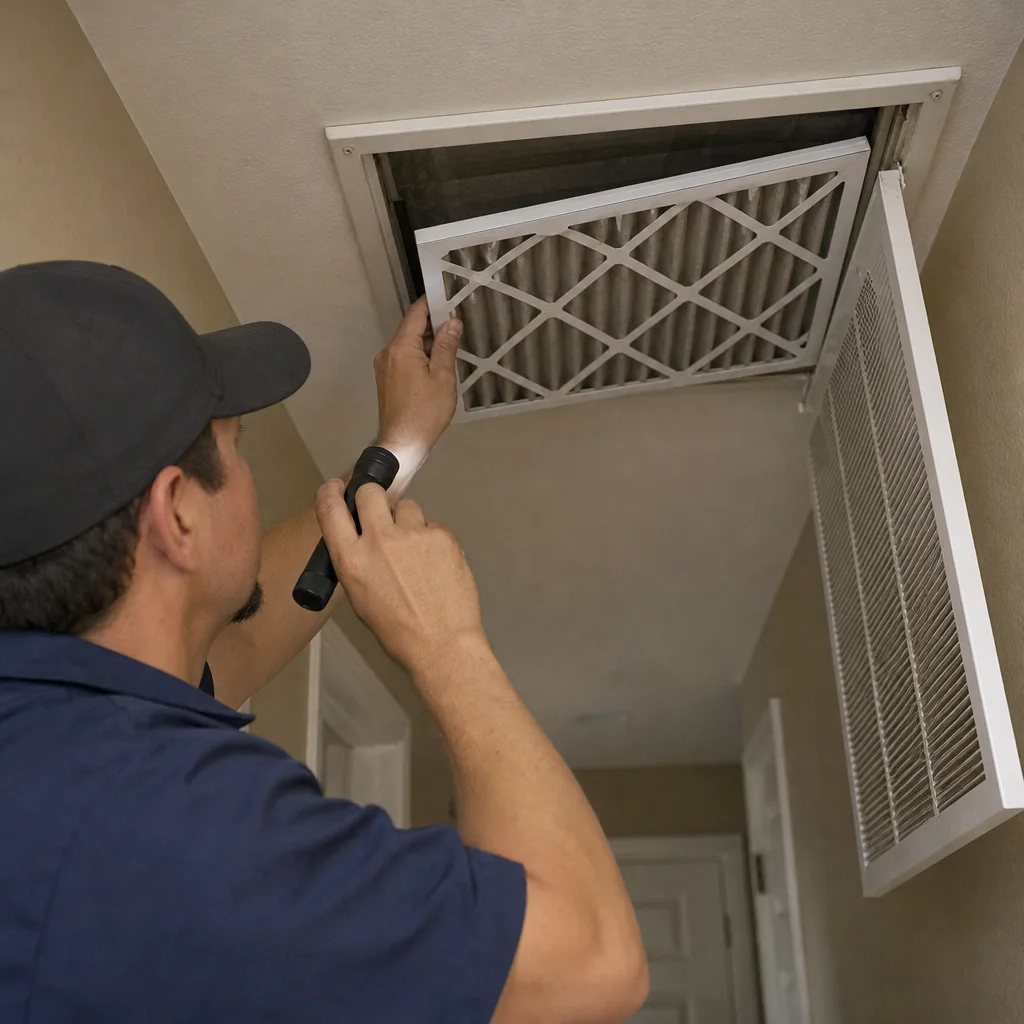
This page covers the parts that actually fail on Bryant units here in Ventura County, which ones we replace most often, what they cost, and how to tell whether you need a simple swap or a full re-install. If you have a Bryant mini-split that is dead, leaking, noisy, or throwing error codes, you are in the right place.
Which Bryant Models This Applies To
Most of the Bryant mini-splits we work on in Ventura fall into three series: the Preferred series (38MHRBCQ), the Evolution series (38MHRBQ), and the Legacy series (38MGRQ). The model number on the outdoor unit tells you which parts family you are dealing with. You will find it on a silver rating plate on the right side of the condenser, usually a character string that starts with “38M” followed by a heat-capacity number like 09, 12, 18, or 24, then a string of letters that identifies the series.
The compatibility gotcha we see often: a 38MHRBQ indoor head will not talk to a 38MHRBCQ outdoor unit even though both say “Bryant” on the label. The circuit boards use different communication protocols. We have had homeowners in east Ventura buy a used head off a neighbor and call us confused about why the system will not pair. Always match series to series, and if you are not sure, snap a photo of both rating plates and send it to us before you order anything.
On the OEM-versus-aftermarket question for Bryant specifically: for boards, sensors, and inverter modules, OEM is the safer route because Bryant tunes their firmware to specific component values. Aftermarket capacitors, fan motors, and thermistors from brands like TitanHD and Mars work fine on most Bryant units and cost 20 – 40% less. We carry both on the truck and will tell you which makes sense for your unit and budget.
Styles & brands we work with
Signs Your Bryant Mini-Split Installation Is Failing
- Flashing error light on the indoor head, but no cold air. This usually points to a failed thermistor or a communication fault between the indoor and outdoor boards. On Bryant units in Ventura, the salt air accelerates corrosion on the outdoor board connectors, and they fail faster than inland units do.
- Water dripping from the wall-mounted head. That is a clogged condensate line or a failed condensate pump, not a refrigerant issue. In Ventura’s humid coastal season, the units produce a lot of water, and if the pump impeller is worn out, the pan overflows and stains your drywall.
- Outdoor unit hums but the fan does not spin. Classic capacitor failure. It is the single most common repair we make on Bryant mini-splits anywhere in Ventura County because heat, salt air, and constant coastal cycling wear capacitors faster than anything else on the unit.
- System short-cycles, turning on and off every few minutes. That often means a failing inverter board or a thermistor that is misreading the coil temperature. Short-cycling is hard on the compressor, so do not ignore it for months.
- Ice forming on the indoor coil while the system barely cools. Low refrigerant from a slow flare fitting leak, or a failing EEV (electronic expansion valve). Flare leaks are the number one issue we find on older Bryant installations done with poor flare technique.
See the difference
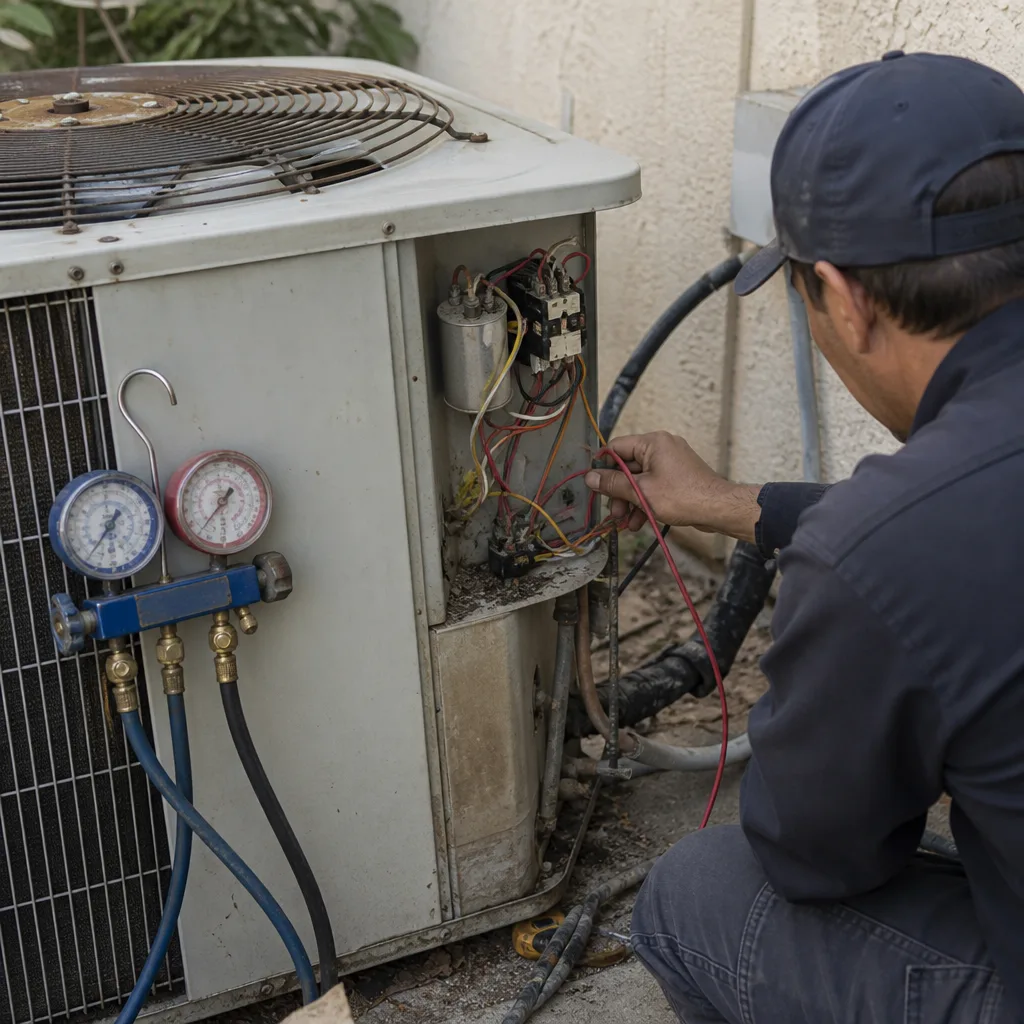 Before
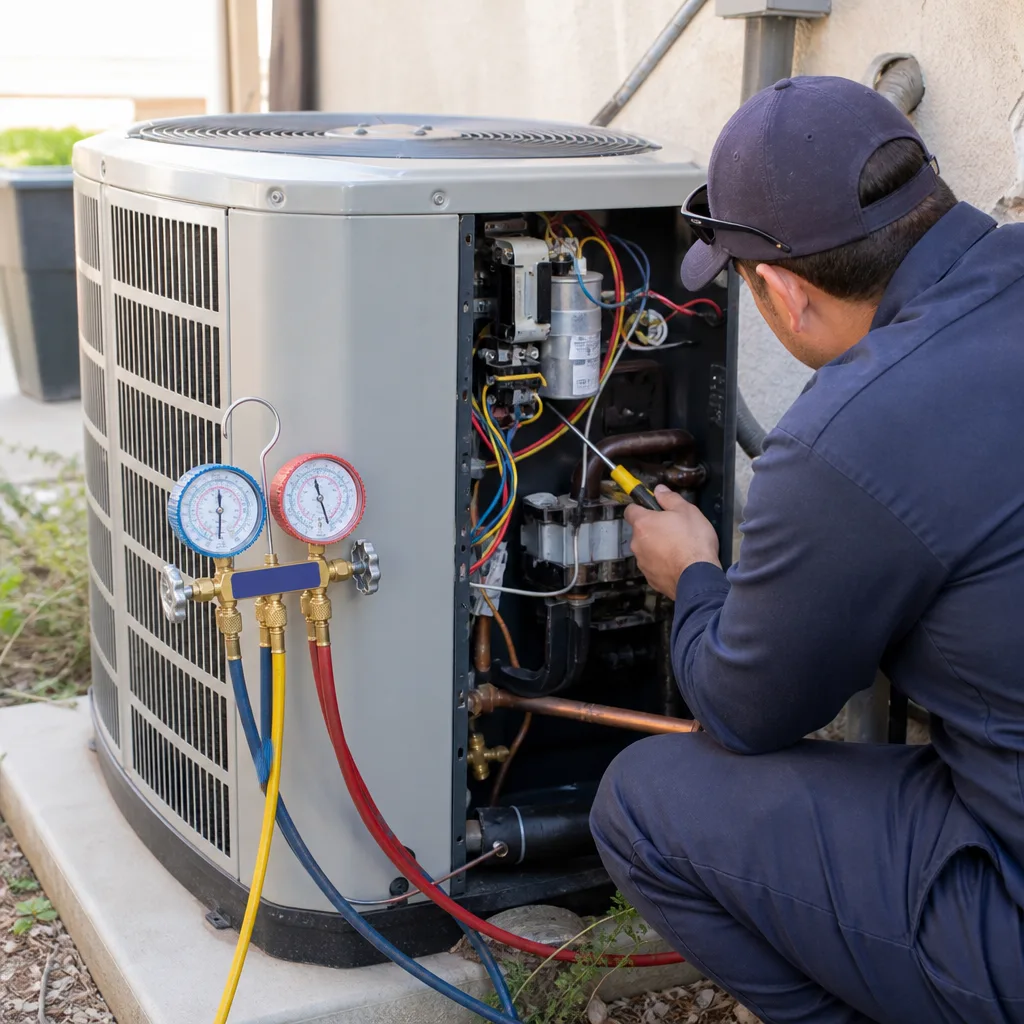 After
After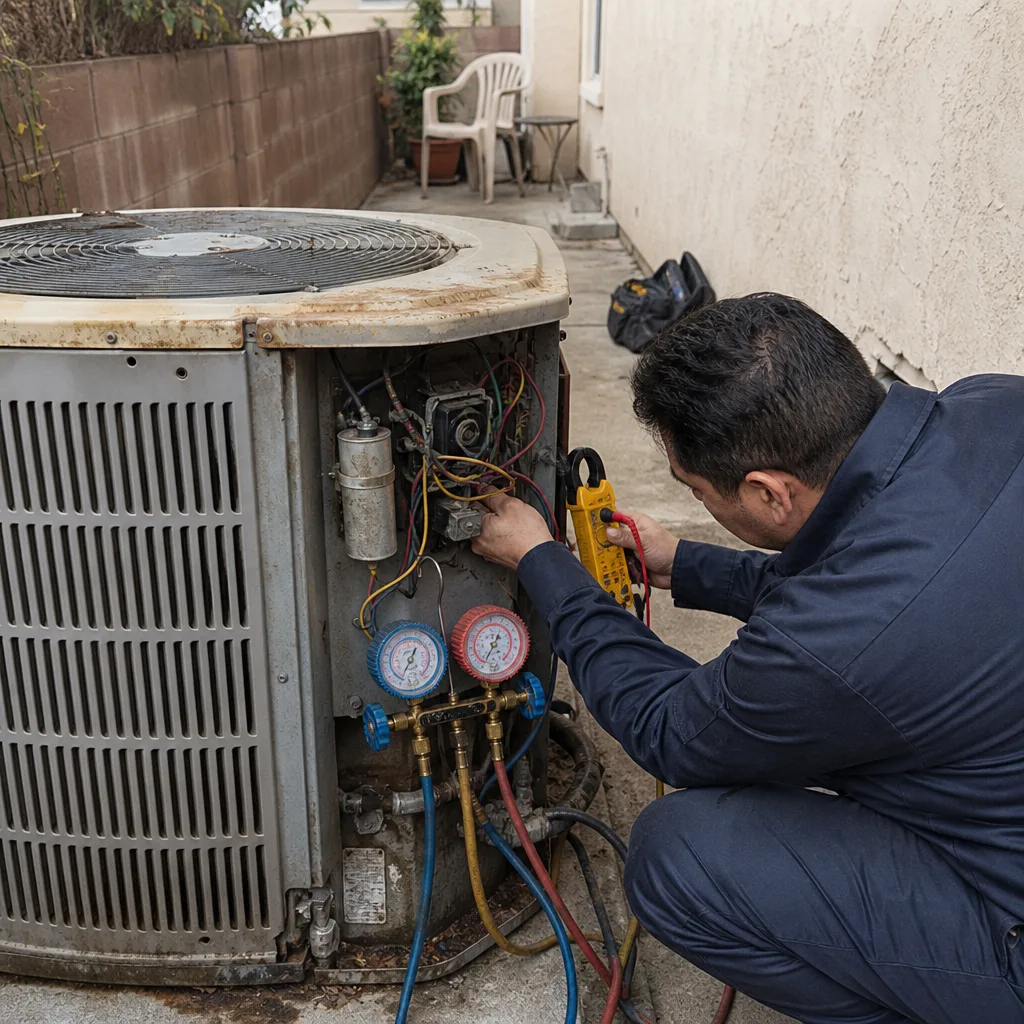 Before
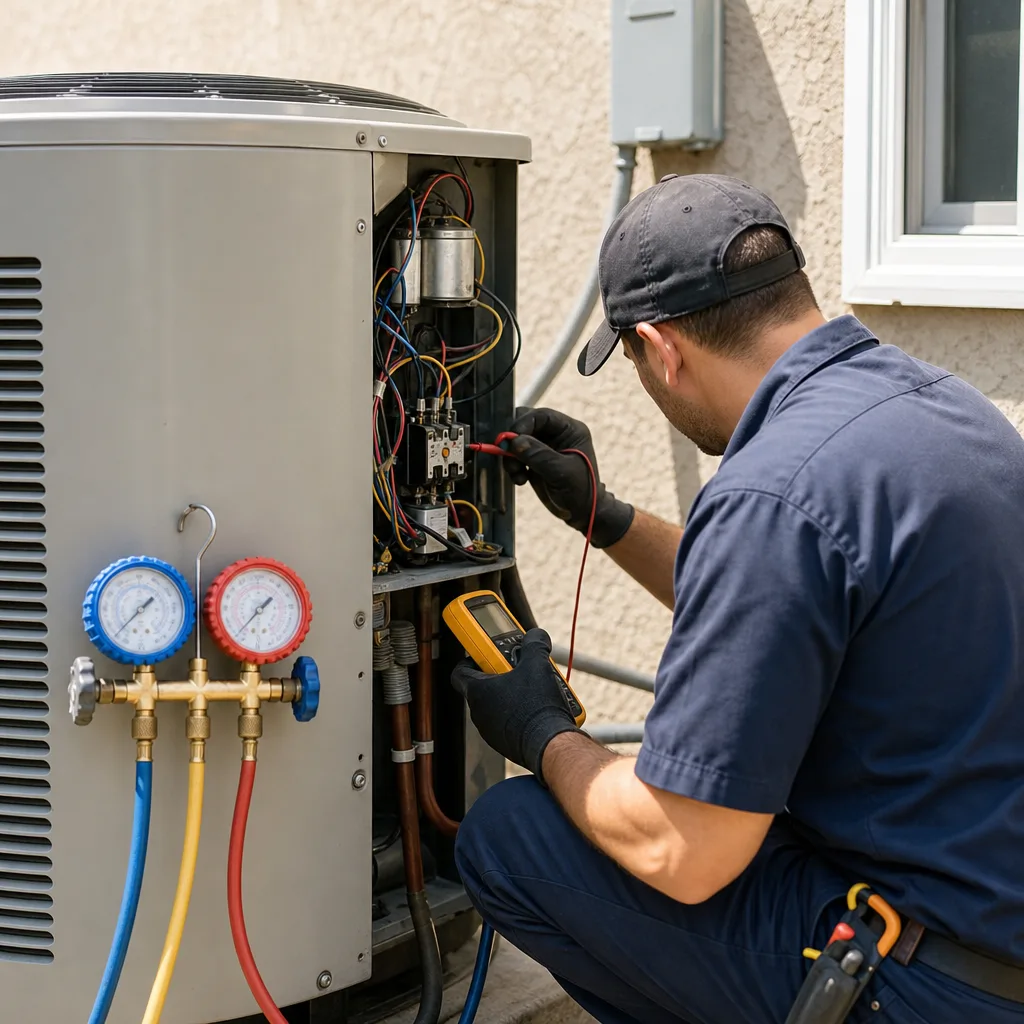 After
After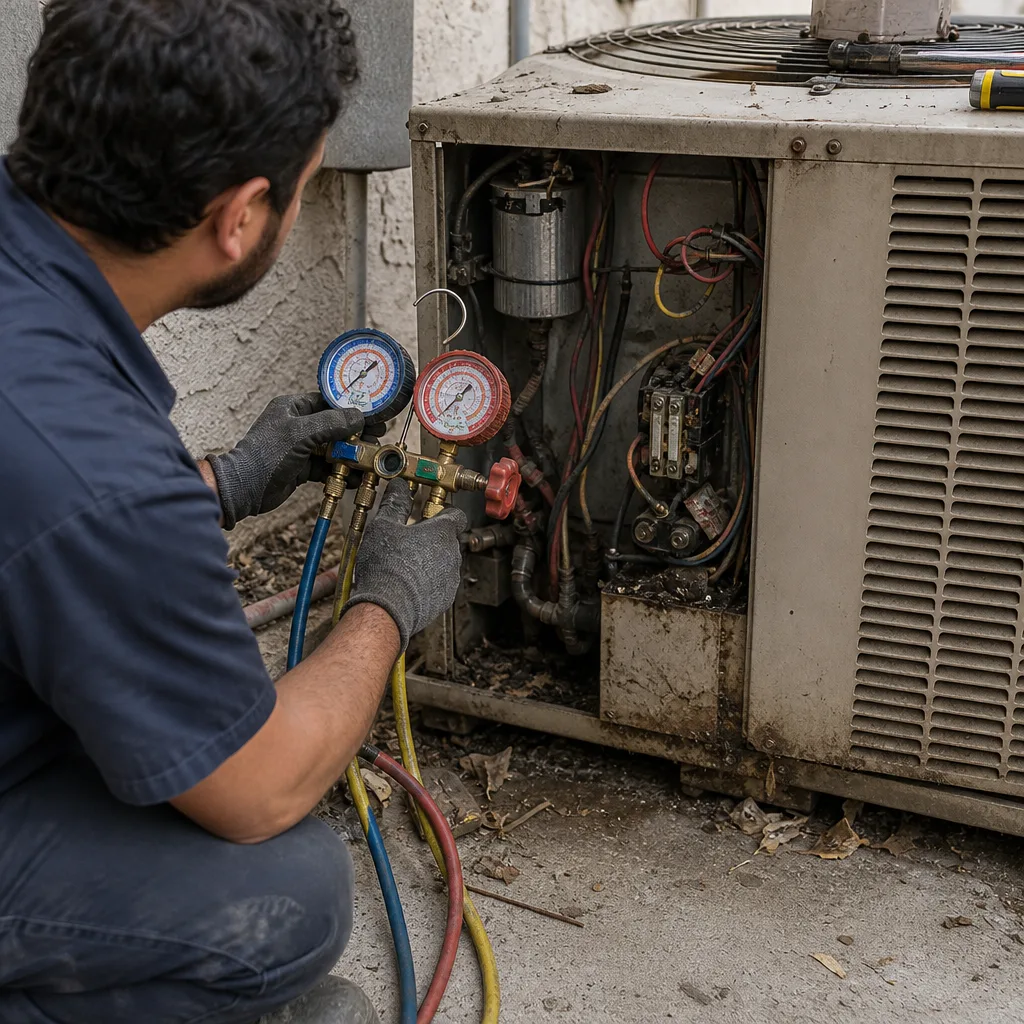 Before
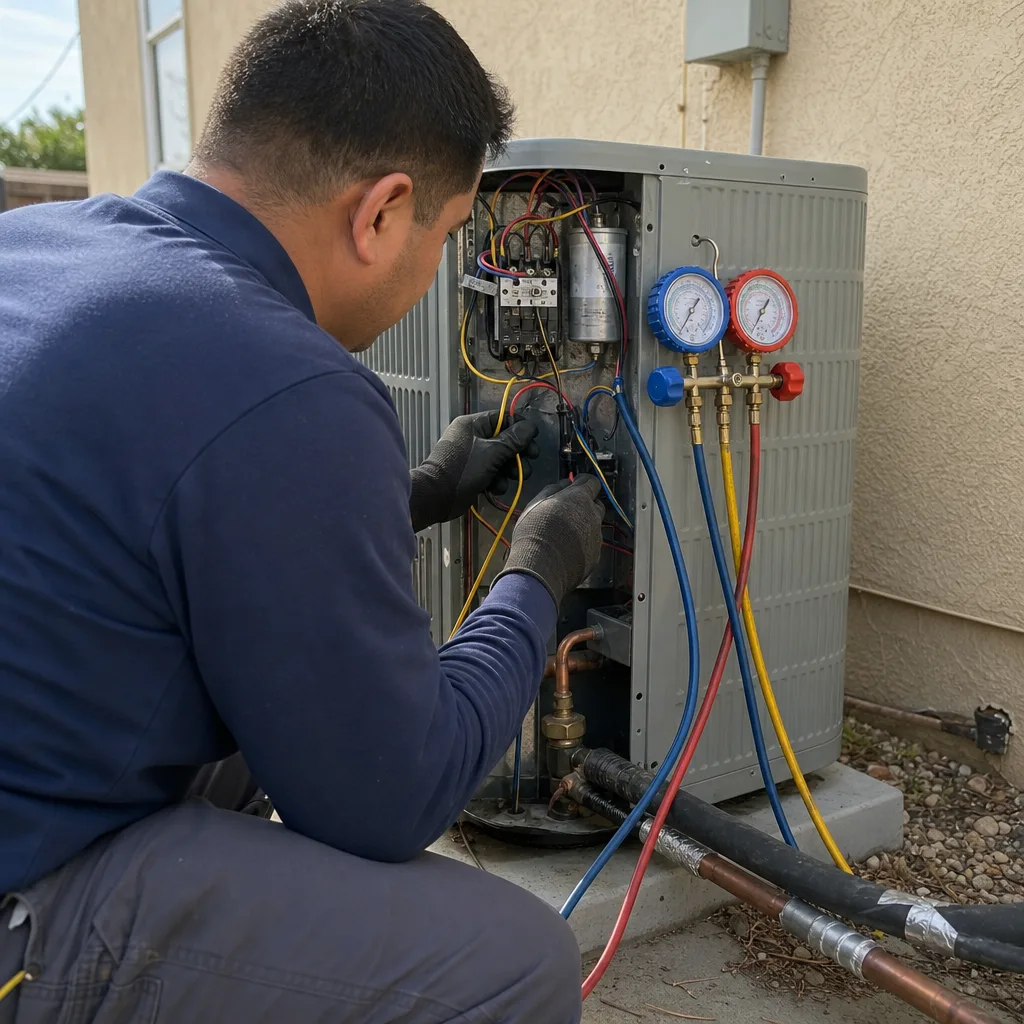 After
AfterReplacement Cost & What’s Included
Most Bryant mini-split component replacements in Ventura land between $150 and $650, parts and labor included. That range covers capacitors, thermistors, indoor fan motors, condensate pumps, and small circuit boards. A full inverter board replacement can push toward the top of that range or a little beyond depending on the series and whether we have to order the part. A full re-installation of a Bryant mini-split system, meaning new indoor head, outdoor unit, line set, and electrical, runs $3,500 – $7,500.
Here is what that service includes on every call:
- A written price before any work starts, no exceptions. You will see the cost of the part and the labor as separate line items.
- The old part shown to you if you want to see it. We never “replace” something we did not actually replace or could not show you.
- A written guarantee on the repair, covering parts and labor for 365 days. If it fails within that year, we come back at no charge under our 365-Day Done Right Promise.
- Verification that the repair fixed the root cause, not just the symptom, before we leave.
DIY or Call Us?
Here is the honest line: you can safely check a few things yourself before calling. Make sure the outdoor unit breaker is on. Check whether the air filter behind the indoor head’s front panel is clogged, because a starved filter mimics a lot of the symptoms of bigger failures. Look for visible water or ice around the unit.Do not open the electrical panel or attempt to test any board, capacitor, or fan motor yourself. Bryant mini-split systems run high-voltage DC inside the inverter circuit even with the breaker off in some configurations, and a capacitor can hold a charge that will knock you across the room. This is where DIY stops being worth the risk.
If you have checked the simple stuff and the system is still dead or acting up, call (831) 539-0291. We will ask you for the model number off the rating plate, tell you which parts we stock for that series, and give you a straight answer on cost before we ever come out. Devin Marlowe has worked on Bryant equipment across Ventura County for nearly two decades, and he will tell you what it is, tell you what it costs, and stand behind the work.
FAQs
Capacitors last 2 – 6 years in coastal Ventura due to salt air and constant cycling. Inverter boards and fan motors typically last 8 – 12 years. Condensate pumps usually give you 4 – 7 years before the impeller wears out. Inland units in east Ventura tend to last a little longer on all fronts because they see less salt exposure.
Rarely. Circuit boards and thermistors are not serviceable in the field, and a capacitor is a $30 – $80 part that is never worth trying to recondition. Condensate pumps can sometimes be cleaned, but if the impeller is worn, replacement is the only fix that lasts. The honest answer is that replacement is almost always the better value.
Most single-component replacements take 45 minutes to 2 hours once the part is in hand. If we have the part on the truck, which we usually do for capacitors, thermistors, and pumps, the whole visit might be 90 minutes. If we need to order a series-specific board, that tacks on 2 – 4 business days in Ventura.
We stock the high-failure items: capacitors in all common Bryant sizes, thermistors, condensate pumps, and universal fan motors. Series-specific inverter boards and EEVs are usually ordered and arrive in 2 – 4 business days. We also stock compatible Carrier, Trane, and Lennox parts for multi-brand households. Call (831) 539-0291 and we will tell you right away if we have yours on the shelf.
If your Bryant mini-split is down, call (831) 539-0291 for a free estimate. A live person answers 24 hours a day, seven days a week. We will tell you plainly what is wrong, what it will cost, and exactly who will show up at your door, before you ever commit to anything.
Written by Devin Marlowe, Owner, Brandt HVAC Co Ventura at Brandt HVAC Co Ventura, serving Ventura and nearby areas.