
Last updated October 16, 2026
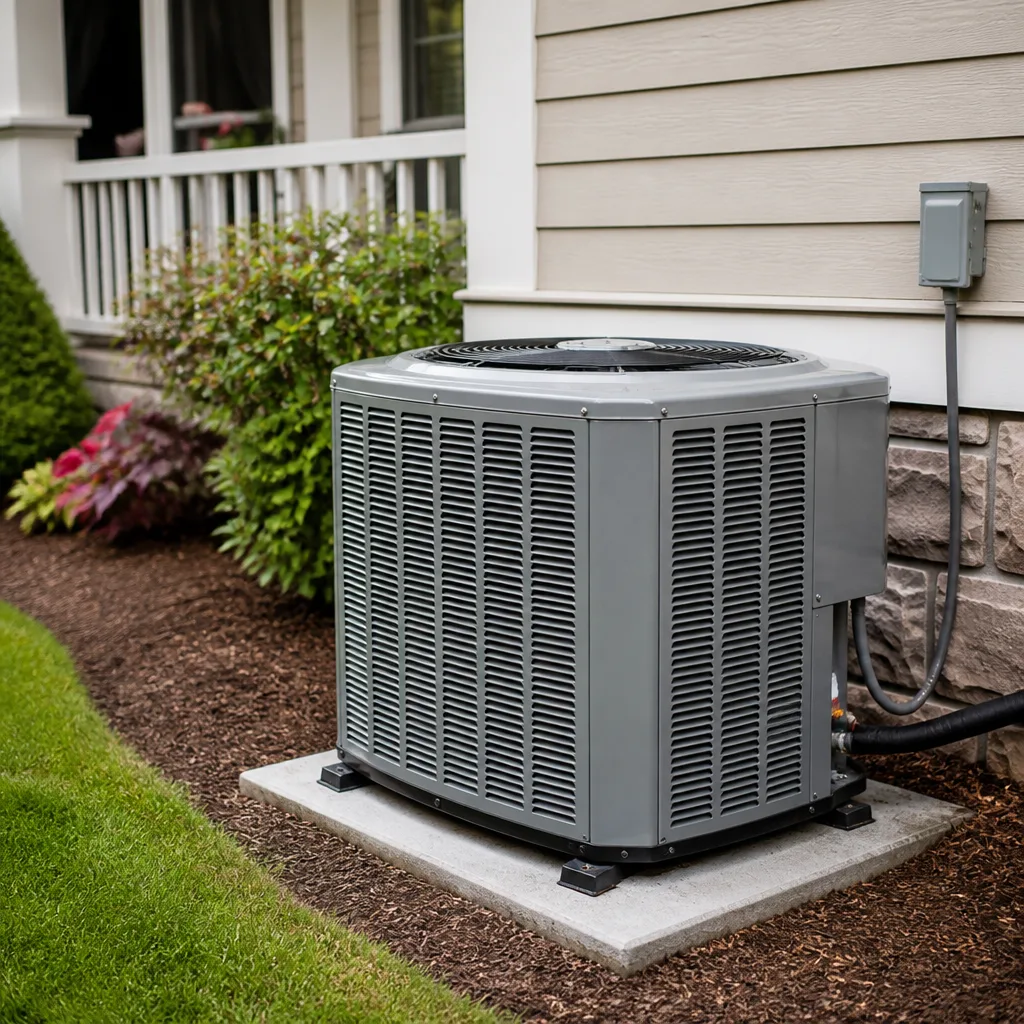 AC repair
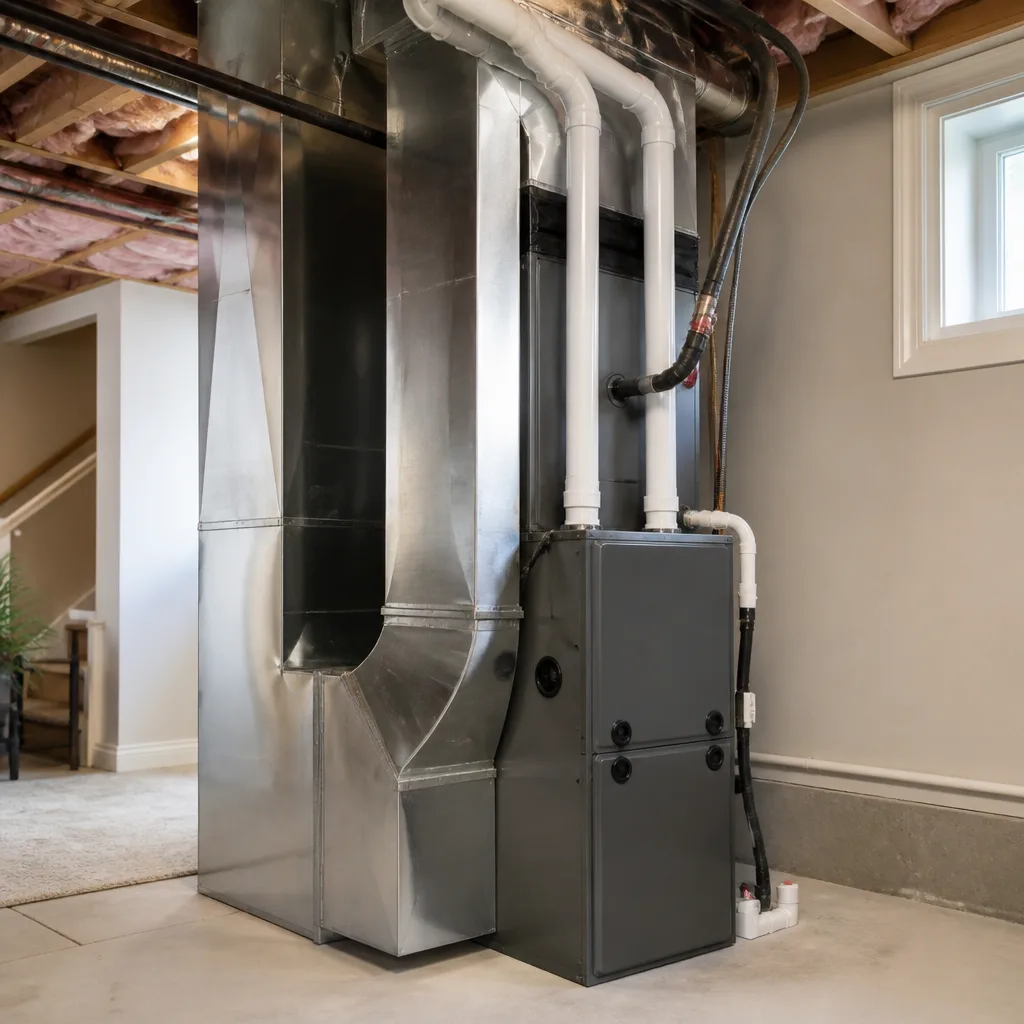 Furnace & heating
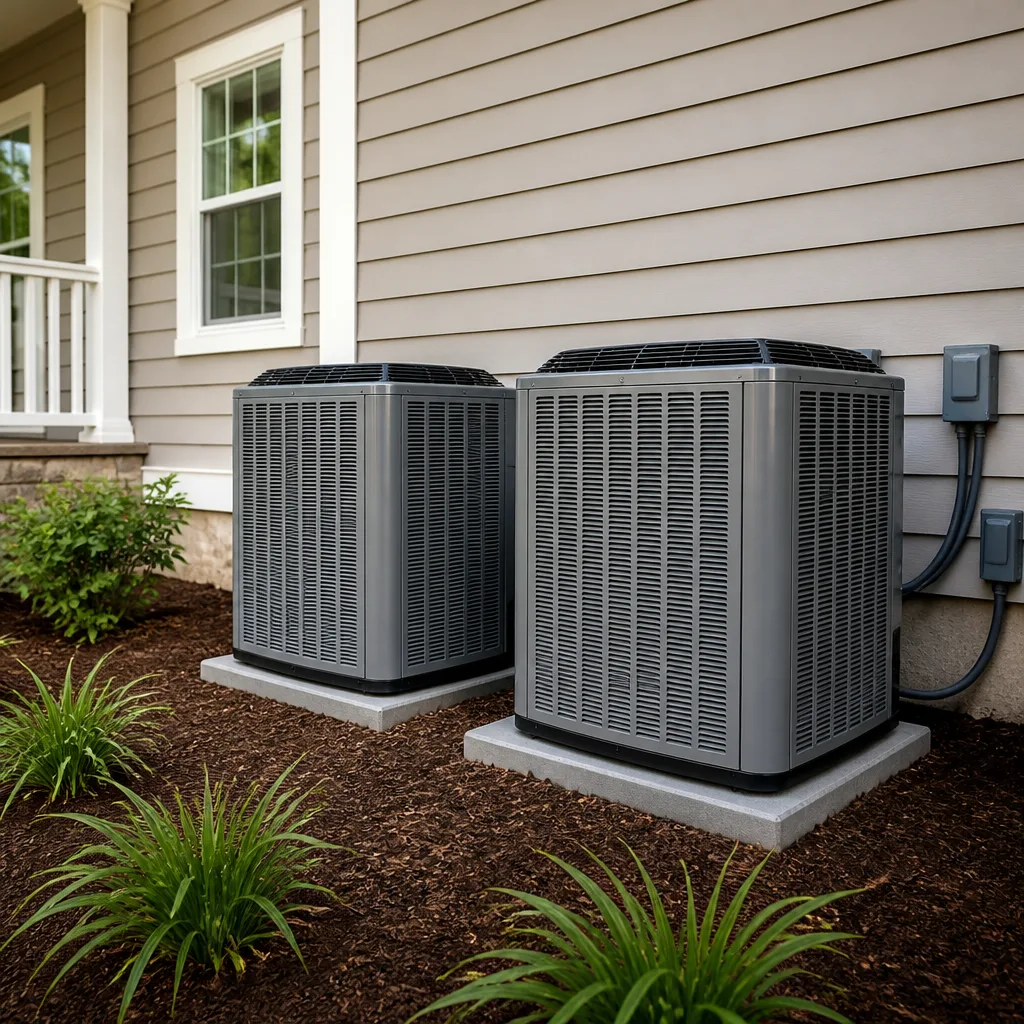 Heat pumps
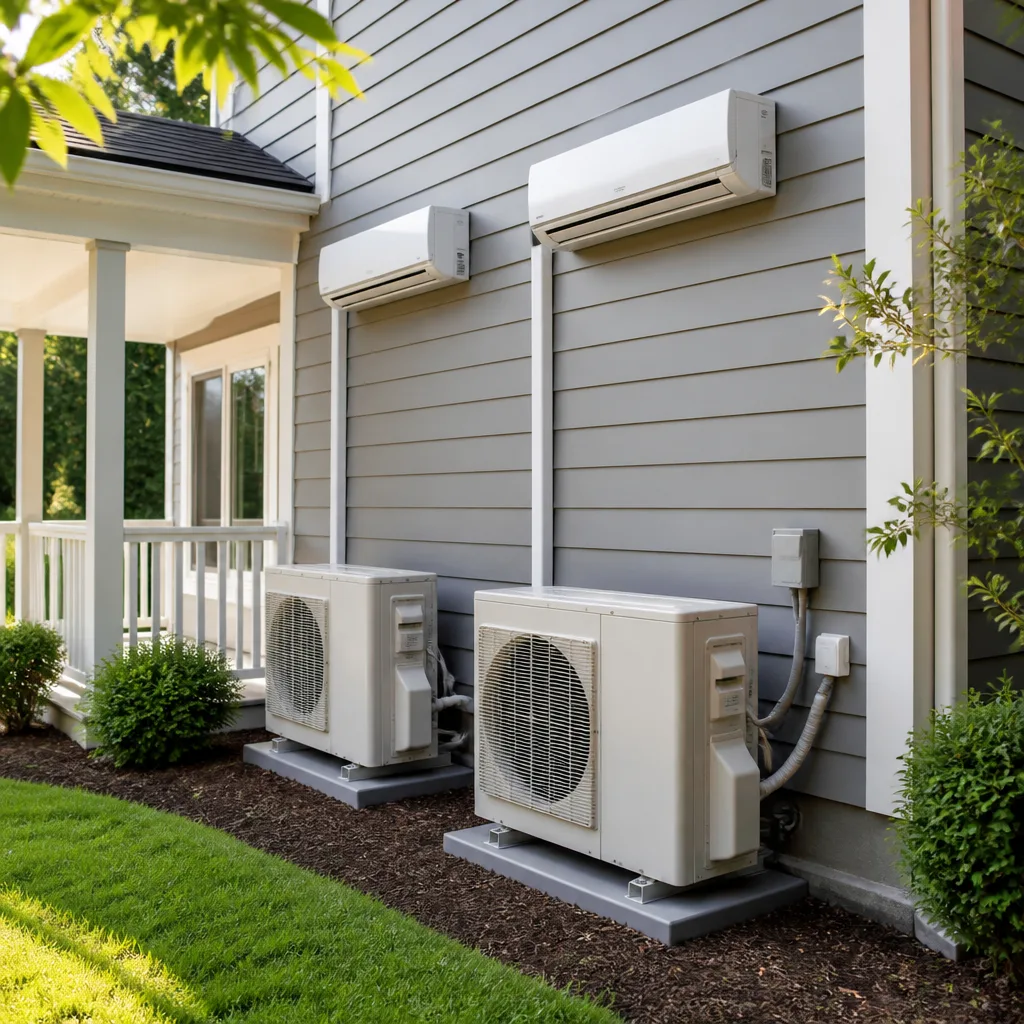 Ductless mini splits
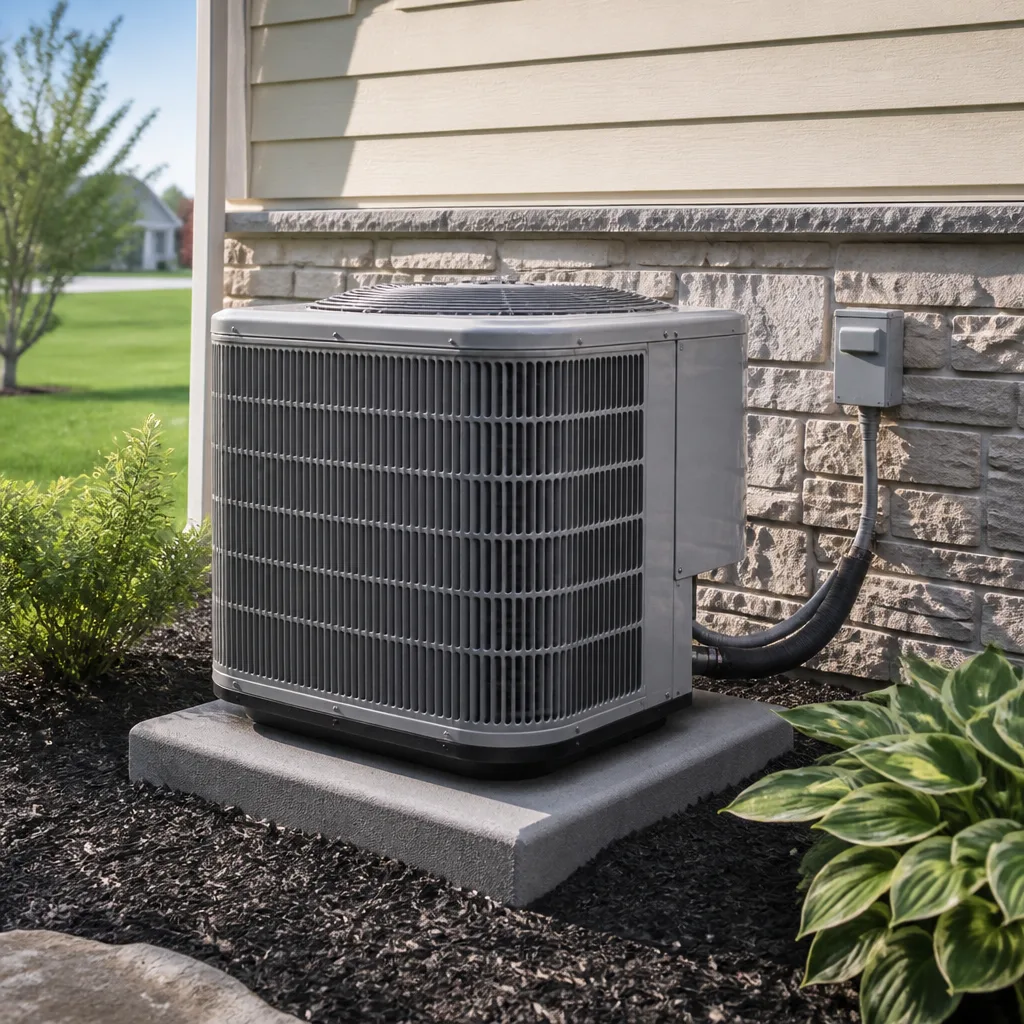 Carrier
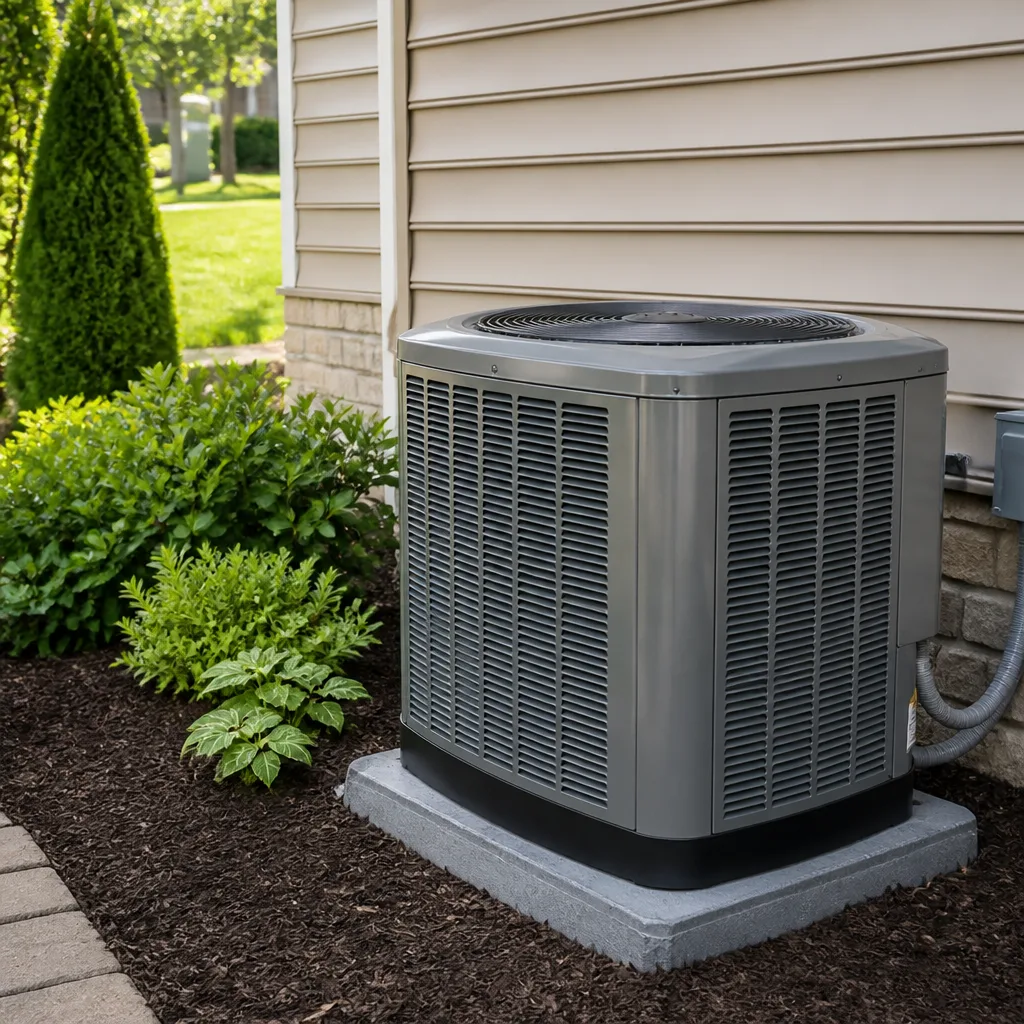 Trane
Trane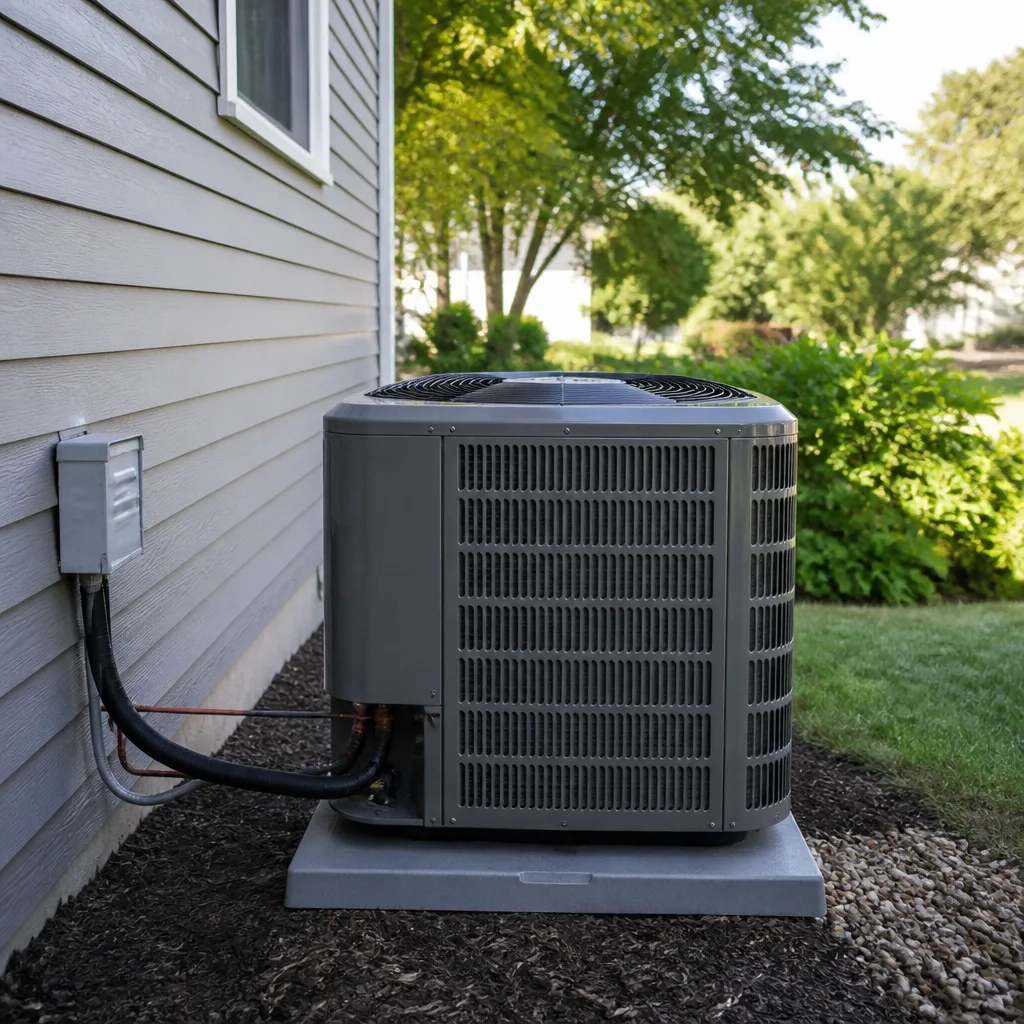 Goodman
Seasonal tune-up and full diagnostic on your Carrier, Trane, or Goodman system - readings shown to you before any repair is proposed
Diagnosis first, numbers second - you approve the repair price before a single part goes in.
Get your free estimateThe Complete Guide to HVAC in Ventura
Most HVAC guides written for “Southern California” were built around inland heat. Palm Springs. Riverside. The Valley. Ventura sits on the coast, where salt-laden marine air corrodes condenser coils twice as fast and humidity makes a 68°F day feel damp enough to run your system when your neighbor inland has theirs off entirely. This guide is different. We’re going to walk through what actually happens to heating and cooling equipment in Ventura’s specific climate, what repairs cost here, when to replace rather than repair, and how to make sure the person you let through your front door is exactly who they claim to be.
Quick Answer
HVAC in Ventura requires different equipment choices and maintenance habits than inland Southern California because salt air, marine layer humidity, and mild coastal temperatures change how systems corrode, cycle, and wear. Homeowners should expect to budget $120 – $220 for annual maintenance, $150 – $550 for most repairs, and $8,500 – $16,000 for a full system replacement, with heat pumps increasingly the smartest choice for Ventura’s mild winters and increasingly warm summers. The single most important decision you’ll make isn’t the brand on the box, it’s who installs and services it - read our How to Hire a HVAC Contractor in Ventura: A Step-by-Step Guide to get this right.
Styles & brands we work with
Table of Contents
- What Makes Ventura’s Climate Different for HVAC
- Salt Air and Your Condenser: The Problem No One Warns You About
- Heat Pump vs. Furnace in Ventura: The Break-Even Math
- East Ventura vs. Coastal Ventura: Why Sizing Changes by Neighborhood
- The Full Service Lifecycle: Install, Tune-Up, Repair, Replacement
- What HVAC Work Actually Costs in Ventura
- Verifying Your Technician: Identity Checks That Matter as Much as Licenses
- Brands Worth Considering for Coastal Homes
What Makes Ventura’s Climate Different for HVAC
Ventura’s HVAC reality starts with geography. The city sits directly on the Pacific, backed by hills that trap marine air in some neighborhoods and block it in others. That means two houses three miles apart can have completely different indoor comfort needs. A home in Midtown near the coast might rarely top 75°F outdoors, while a house in the east end near Saticoy can push into the high 80s or low 90s on the same August afternoon.
The marine layer is the big variable nobody talks about. From late spring through early fall, Ventura wakes up under a blanket of low cloud that burns off anywhere from 10 a.m. to 2 p.m. depending on the day. During those morning hours, outdoor temperatures hover in the low 60s while indoor humidity creeps up. The result: your air conditioner isn’t fighting heat, it’s fighting moisture. That changes the equipment you need and the way it should be configured.
We’ve also noticed a pattern across years of AC repair in Ventura that homeowners don’t expect: systems here often fail from corrosion before they fail from wear. Inland systems die from compressor fatigue after thousands of hours of hard runtime. Coastal systems die from rust, pitting, and electrical connection degradation, even when they’ve run half as many hours. The failure mode is different, which means the prevention strategy has to be different too.
Finally, Ventura’s winter is mild but real. Overnight lows in December and January routinely dip into the low 40s, and the dampness makes 45°F feel far colder than it does in a dry climate. Homes without adequate heat are uncomfortable and, in some older coastal properties, develop moisture problems that go beyond comfort. The takeaway: you need both heating and cooling designed for humidity, not just temperature.
Salt Air and Your Condenser: The Problem No One Warns You About
Here’s the most important fact in this guide: salt air corrodes outdoor HVAC equipment in Ventura at roughly twice the rate it does ten miles inland. That’s not marketing scare talk. It’s electrochemistry. Salt particles suspended in marine air settle on condenser coils and aluminum fins, and when the coil gets wet from condensation or morning fog, the salt creates a mild electrolytic solution that accelerates oxidation. Your outdoor unit is slowly rusting every single day it sits in your yard.
What that means in practical terms:
- Standard aluminum fins develop pitting and flaking within 5-7 years in coastal Ventura, compared to 12-15 years inland.
- Electrical connections and contactor points corrode faster, leading to intermittent failures that are hard to diagnose.
- Refrigerant leaks become more common as coil surfaces degrade, since corroded metal is more likely to develop pinhole leaks.
- Capacitors, which are sealed but still vulnerable to moisture ingress, fail more frequently in the marine environment.
What should you ask for if you’re installing new equipment in Ventura? Specific coatings and materials. Most major manufacturers offer coastal protection packages or, at minimum, options worth specifying:
- Epoxy-coated coils: A thin polymer coating applied to the condenser coil that creates a barrier between the metal and salt-laden air. This is the single most effective upgrade for coastal homes. Expect to pay $300-$600 extra on a new system.
- Marine-grade cabinet finishes: Some manufacturers build outdoor units with zinc-coated steel and UV-resistant powder coat that stands up better to salt spray.
- Elevated installation pads: Raising the outdoor unit 4-6 inches above ground reduces splash-back from rain and irrigation, both of which constantly re-wet the base of the unit and accelerate rust.
- Annual fin cleaning with a corrosion inhibitor: A maintenance step that removes salt buildup before it can etch into the metal.
If you already have an older system and live within a mile of the ocean, don’t panic. A thorough AC maintenance visit in Ventura that includes fin cleaning, electrical connection inspection, and a corrosion check can extend the life of an existing coastal unit by several years. The key is catching pitting early, before it becomes a refrigerant leak.
Heat Pump vs. Furnace in Ventura: The Break-Even Math
Ventura’s mild winters create a pricing and efficiency argument that most California guides miss. A traditional gas furnace is overkill for Ventura’s climate. It’s designed to heat a home through sub-freezing winters, and running one here is like using a flamethrower to toast bread. A heat pump, by contrast, is sized perfectly for Ventura’s temperature range: it heats efficiently down to about 35°F and cools efficiently up to about 100°F, which covers 99% of the weather this city actually experiences.
Let’s talk numbers. A heat pump moves heat rather than creating it, which means it can deliver 2-3 units of heat for every unit of electricity it consumes. A modern gas furnace delivers about 0.95 units of heat for every unit of gas energy. The difference shows up on your utility bill: Ventura homeowners who switch from a furnace to a heat pump typically see annual heating costs drop 30-50%, especially with current electricity and gas rates.
The break-even math on installation cost looks like this:
- Furnace-only system (gas): $4,500-$7,000 installed. Requires a separate AC unit if you want cooling, pushing total to $10,000-$14,000.
- Heat pump system (electric): $8,500-$16,000 installed, handles both heating and cooling in one unit. No gas line needed.
- Dual-fuel system (heat pump + small furnace backup): $12,000-$18,000. Overkill for Ventura’s climate, unless you live far east in the hills where winter nights occasionally drop below freezing.
The upgrade premium for a heat pump over a standard AC + furnace combo typically runs $2,000-$4,000. With the efficiency savings, most Ventura homeowners recover that premium in 4-7 years. After that, the heat pump is pure savings. Plus, heat pumps qualify for federal tax credits and, in some cases, local rebate programs that can shave thousands off the installed price.
One caveat: heat pumps require a dedicated electrical circuit and, sometimes, a panel upgrade. If your Ventura home has an older electrical panel, factor an additional $1,500-$3,500 into the budget. We recommend getting a load calculation done before committing to any system type, so you know exactly what the electrical side requires.
East Ventura vs. Coastal Ventura: Why Sizing Changes by Neighborhood
Ventura is not one climate. It’s at least two, and arguably three. Understanding which one your home sits in should drive every equipment decision you make.
Coastal neighborhoods (Pierpont, Midtown, downtown Ventura, the Avenue): Cooler, more humid, heavily influenced by marine air. Summer highs rarely exceed 78°F. The HVAC challenge here is humidity control, not raw cooling capacity. Oversized air conditioners are common and problematic, because they cool the air too quickly and shut off before they’ve run long enough to dehumidify. The result is a cold but clammy house. If you live near the coast, the most important specification is a two-stage or variable-speed compressor that runs longer at lower output, pulling more moisture out of the air. You also need coastal corrosion protection, which we covered two sections back.
East Ventura neighborhoods (Saticoy, Montalvo, east end near the 126): Hotter, drier, more inland-like. Summer highs can reach the low 90s. The cooling load is genuinely higher here, and a properly sized single-stage system is often adequate. Humidity is less of a concern than direct heat removal. The salt corrosion risk is somewhat lower than coastal areas but still present, since prevailing winds push marine air up the Santa Clara River valley.
Hill neighborhoods (Ondulando, Hidden Valley, hillside areas): Elevation matters. These homes experience cooler overnight temperatures year-round and, in some canyons, cold air pooling in winter. Heating requirements are higher here than anywhere else in Ventura, and if you’re considering a heat pump, look for a cold-climate model rated for reliable heating down to 25°F or below.
The practical takeaway: never accept a quote from a contractor who offers you a system size without first doing a Manual J load calculation for your specific address. “We usually put 3 tons in houses like yours” is a red flag. A 3-ton system might be right for a 1,400-square-foot coastal bungalow and completely wrong for a 1,800-square-foot east Ventura ranch. Sizing is neighborhood-specific, and in Ventura the neighborhood differences are bigger than most contractors admit.
The Full Service Lifecycle: Install, Tune-Up, Repair, Replacement
A heating and cooling system is a 12-20 year commitment. Understanding what actually happens at each stage protects you from surprises and positions you to make good decisions when things go wrong.
Stage 1: Installation (typically 1-2 days). A new system install in Ventura usually takes one full day, sometimes two for a heat pump or dual-fuel system. A proper install includes removing old equipment, evaluating ductwork condition, brazing and pressure-testing refrigerant lines, running electrical connections, configuring the thermostat, and testing the system through both heating and cooling cycles. The written quote should specify the exact model number, coil type (with coating if coastal), thermostat model, warranty terms, and an itemized breakdown of labor vs. materials. You should receive a written equipment warranty (typically 10 years on parts from the manufacturer) and a separate labor warranty from the installer. Ask what the labor warranty covers. One year is a minimum. Two to five years is better.
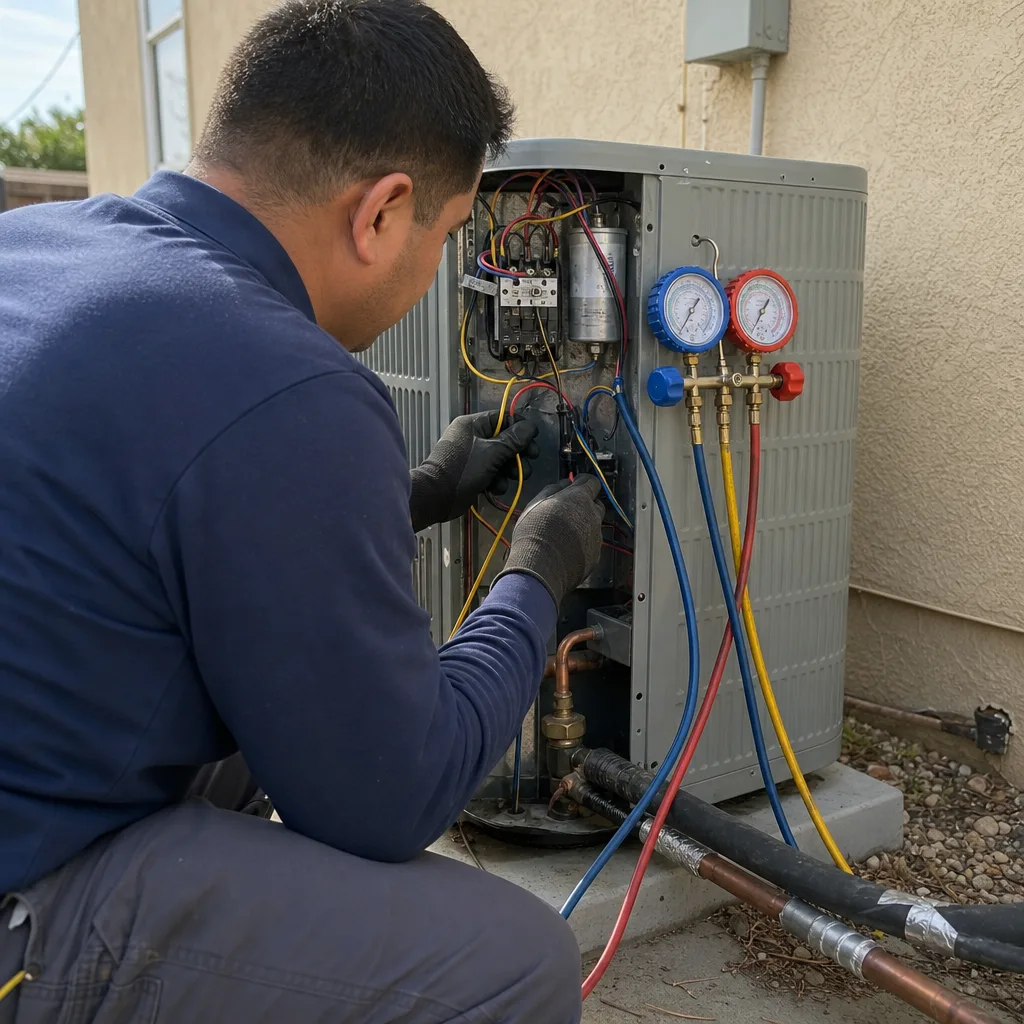
Stage 2: Annual tune-up (1-2 hours, once per year). Annual maintenance is not optional in Ventura’s salt air environment. A proper tune-up includes cleaning or replacing the air filter, cleaning the condenser coil and fins, checking refrigerant charge, testing capacitors and contactors, inspecting electrical connections for corrosion, checking the condensate drain line, verifying thermostat calibration, and inspecting the furnace or heat pump heating elements. Expect to pay $120-$220 in Ventura. Skip this step and you’re gambling that corrosion won’t create a $500 repair that a tune-up would have caught.
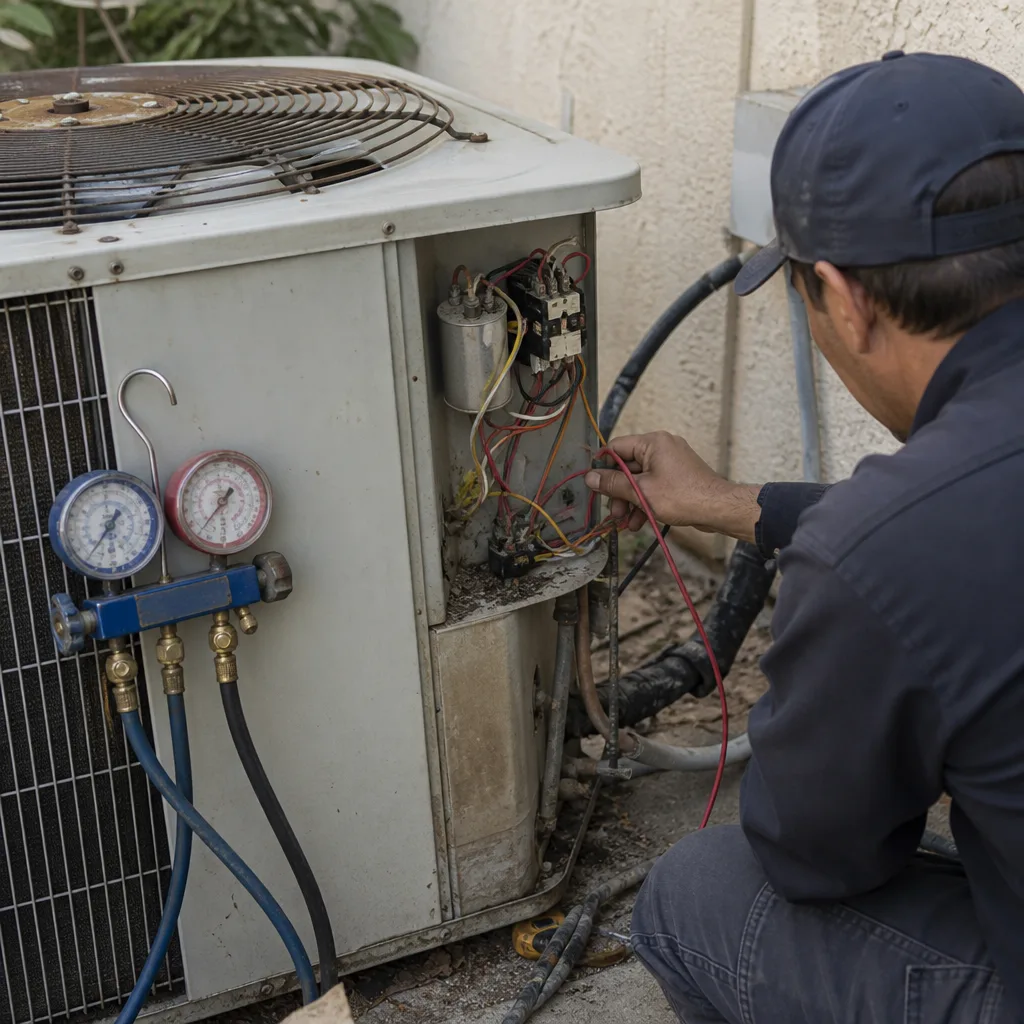
Stage 3: Repair (2-4 hours, same day or next day). When something fails, the process should be: diagnose the problem, get a written price for the fix, approve the work, and have it completed. Most furnace repairs in Ventura and AC repairs take 2-4 hours on site. Common repairs include capacitor replacement ($150-$300), contactor replacement ($100-$250), ignitor replacement for furnaces ($150-$300), condensate drain clearing ($90-$180), and refrigerant leak repair ($300-$800 depending on severity). A reputable company gives you the price before starting work and includes a written guarantee on the repair. If a repair fails within the guarantee window, the return visit should be free.
Stage 4: Replacement (deciding when to let go). The general rule: if a repair costs more than 30% of the replacement cost, and the system is more than 10-12 years old in a coastal environment, replacement usually makes more financial sense. The math is simple. A $1,200 compressor replacement on a 14-year-old system that’s already showing corrosion on the coil is money spent delaying the inevitable. That same $1,200 goes further as a down payment on a new system with a fresh warranty and better efficiency. In Ventura specifically, the corrosion factor pushes the replacement timeline shorter than inland. Plan for 12-15 years on a coastal system vs. 15-20 inland.
What HVAC Work Actually Costs in Ventura
These are real price ranges we’ve seen repeatedly in the Ventura market. They reflect local labor rates, coastal equipment specs where relevant, and the general cost of doing business in this city. Use them as a baseline for evaluating any quote you receive.
| Service | Typical Price Range in Ventura | What It Includes |
|---|---|---|
| Annual AC tune-up | $120 – $220 | Coil cleaning, refrigerant check, electrical inspection, filter replacement |
| Capacitor replacement | $150 – $300 | Part and labor, same-day in most cases |
| Contactor replacement | $100 – $250 | Part and labor, electrical connection check |
| Furnace ignitor replacement | $150 – $300 | Part and labor, combustion check |
| Condensate drain clearing | $90 – $180 | Drain line flush and cleaning |
| Refrigerant leak repair | $300 – $800 | Leak detection, repair, refrigerant recharge |
| Thermostat replacement | $150 – $400 | Thermostat cost, installation, programming |
| Full system replacement (furnace + AC) | $8,500 – $14,000 | Equipment, installation, permits, warranty registration |
| Heat pump installation | $8,500 – $16,000 | Equipment, installation, electrical, permits, warranty registration |
| Coastal corrosion coating (new install) | $300 – $600 | Factory or field-applied epoxy coil coating |
These prices assume a standard single-family home in Ventura. Larger homes, systems with zoning, ductwork replacement, or electrical panel upgrades will push costs higher. Every quote should be in writing, itemized, and provided before any work begins. If a contractor is reluctant to put a price on paper, that’s your cue to call someone else.
Verifying Your Technician: Identity Checks That Matter as Much as Licenses
Here’s a scenario we hear from Ventura homeowners all the time. You call an HVAC company. They say someone will be out between 1 and 4 p.m. A truck pulls up. A person gets out and walks toward your door. You assume they’re the technician. Almost certainly they are. But you never actually verified it. You let a stranger into your home based on the assumption that they work for the company you called.
Most HVAC companies ask you to trust them on identity. We think that’s not good enough. You should know three things before you open the door:
- Who is coming, by name. The company should tell you the technician’s name before they arrive. Not “one of our guys.” A specific name.
- What they look like. A photo sent by text or email lets you match the person at the door to the person you were told to expect. This eliminates the “someone else took the job” scenario entirely.
- What identification they’ll show. A uniform is not identification. A photo ID badge is. The technician should present it at the door, before entering, without being asked.
Licensing matters too, of course. In California, HVAC contractors must hold a C-20 license from the Contractors State License Board. You can verify any contractor’s license number on the CSLB website. But a license tells you the company is legal. It doesn’t tell you the person at your door is who they say they are. That’s the identity gap, and it matters enormously for homeowners who are home alone, parents with young children, or older adults.
This is also where the Threshold Verified standard comes in. Every technician we send to a Ventura home is background-checked, identity-verified, and introduced to you by name and photo before the visit. At the door, they show a photo ID badge. If anyone arrives who you were not told to expect, that visit is on us, and we make it right. The point of any technician verification system should be certainty about who is walking through your door. We’ve built our entire service model around that principle because homeowners in Ventura deserve it.
Brands Worth Considering for Coastal Homes
Brand matters less than installation quality, and less than coastal protection, but some manufacturers have better corrosion-resistant options than others. Here’s what we’ve observed in Ventura specifically, across hundreds of service calls and installs:
Lennox builds some of the quietest equipment in the industry, and their coastal units hold up well if you specify the corrosion-resistant coating. Their higher-end condensers include fin designs that shed moisture more efficiently, which helps in marine air. Lennox parts tend to be more expensive when repairs are needed, so factor that into the long-term cost.
Goodman offers the most straightforward value proposition: solid equipment at lower price points, with parts that are widely available and inexpensive. Their coastal protection is adequate but not class-leading. If you’re on a budget and live slightly inland in east Ventura, a Goodman system with an epoxy coil coating is a reasonable choice.
Rheem has quietly become one of the better choices for coastal environments. Their condenser cabinets use a powder-coated finish that resists salt corrosion well, and their heat pump lineup is strong. Rheem’s pricing sits in the middle of the pack, and their 10-year parts warranty applies across most of their product line.
York produces reliable mid-range equipment with a good track record in humid climates. Their variable-speed options are efficient, and their corrosion-resistant packages are competitive. York’s dealer network in Ventura is smaller than the other brands, which can occasionally mean longer wait times for specialized parts.
Our advice: don’t choose a brand first. Choose a contractor who will do a proper load calculation, specify the right coastal package for your location, and stand behind the installation with a real labor warranty. Then discuss which brands they recommend and why, given your home’s specific conditions in Ventura.
Common Mistakes to Avoid
- Skipping annual tune-ups in a salt-air environment. Inland, you can occasionally get away with skipping a year. In coastal Ventura, that skipped year is exactly when corrosion damage compounds and turns a $200 tune-up into a $1,000 repair.
- Oversizing your AC near the coast. A system that’s too big cools the air before it dehumidifies, leaving you with a cold, damp house. This is the most common equipment mistake we see in coastal Ventura neighborhoods.
- Choosing a furnace-only system when a heat pump makes more sense. Ventura’s mild winters make furnaces inefficient overkill, and you’ll still need a separate AC unit. A heat pump handles both jobs and qualifies for tax credits.
- Not asking about coil coatings and corrosion protection on new equipment. If you live within a mile of the ocean and your installer never mentions epoxy-coated coils, that installer doesn’t understand coastal HVAC. Demand the upgrade.
- Letting a technician into your home without verifying their identity. A truck logo and a uniform are not identification. Know the name before arrival, match the face to the photo, and ask for a photo ID badge at the door.
- Replacing a system without a written, itemized quote. Verbal estimates shift. A written price with itemized labor and materials locks in the cost and gives you a document to compare against other bids.
- Delaying a small repair until it becomes a big one. A $180 contactor replacement is a minor fix. The compressor failure it can trigger if left unaddressed is a $2,000 problem. Small electrical issues in coastal environments escalate quickly.
See the difference
 Before
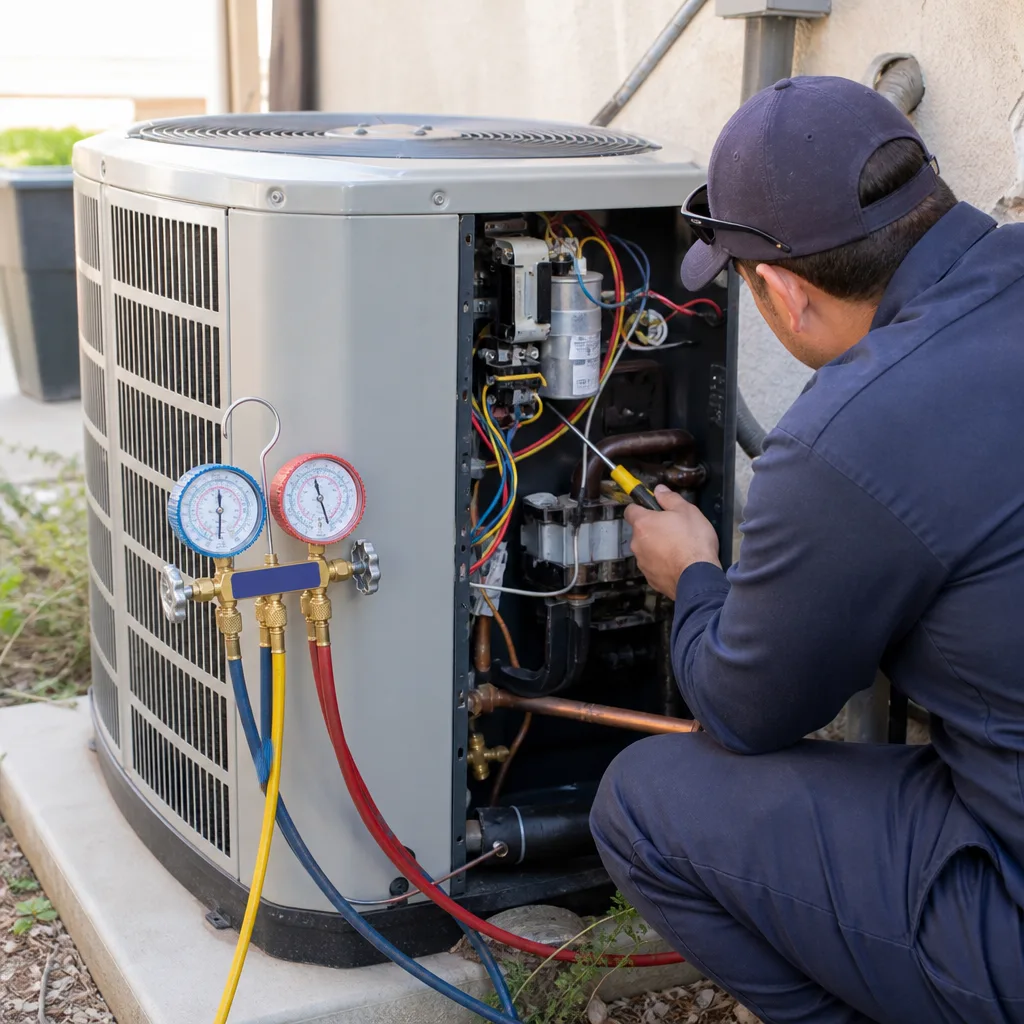 After
After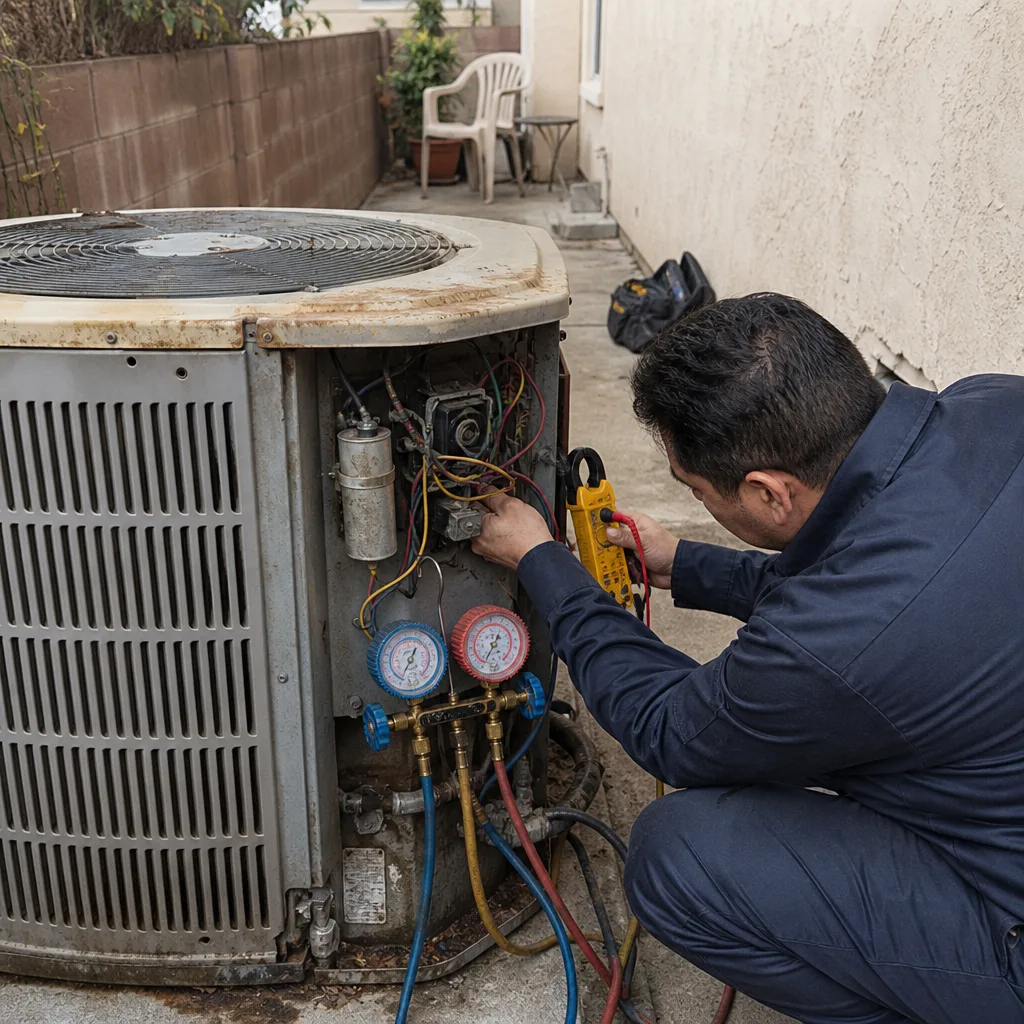 Before
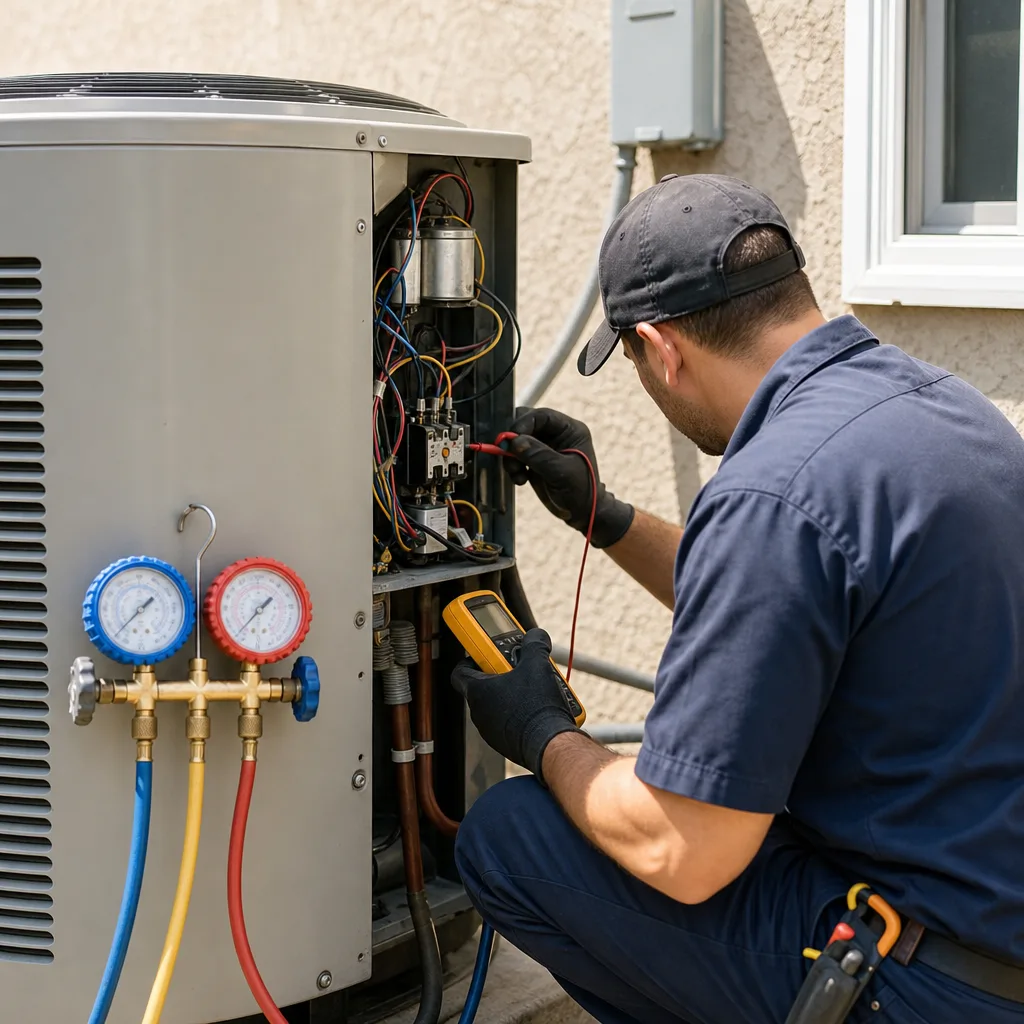 After
After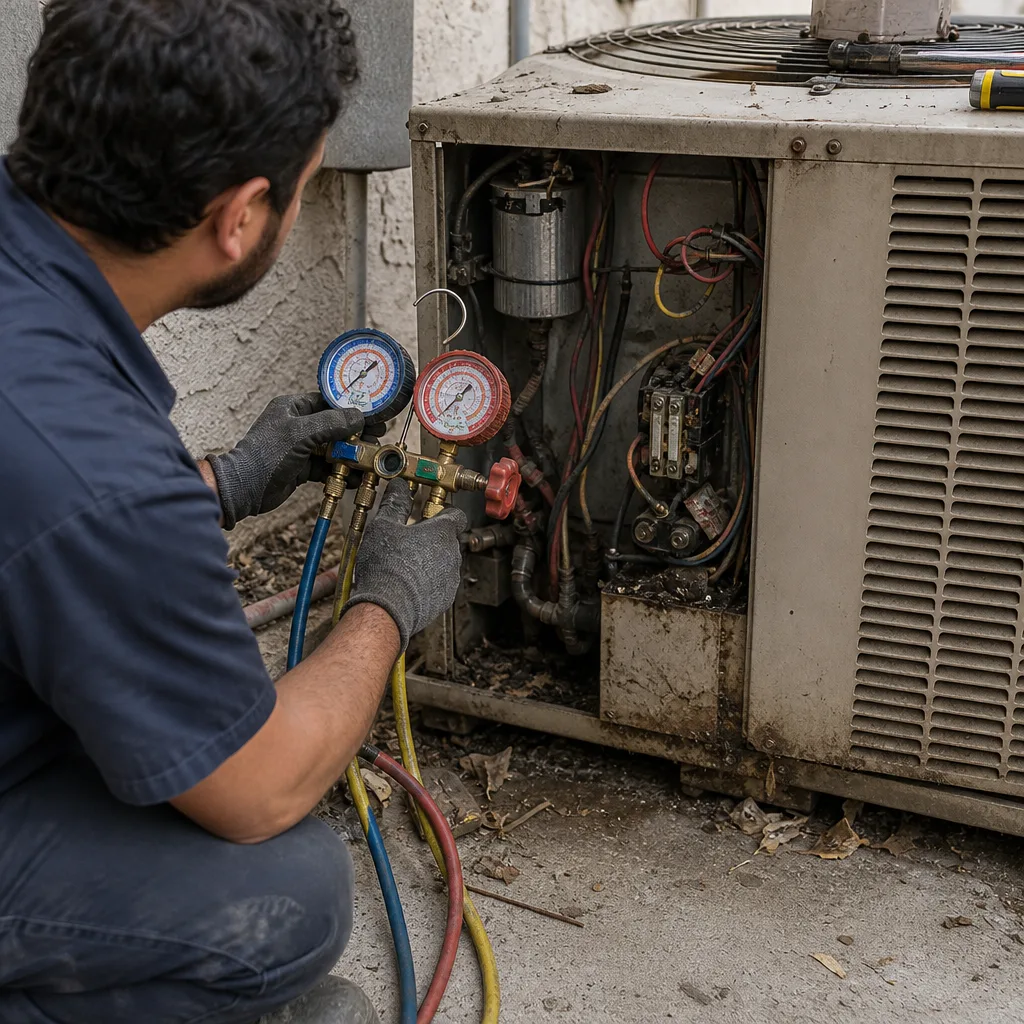 Before
 After
AfterWhen to Call a Professional
Some HVAC issues are homeowner-visual. You can change a filter, clear debris from around the outdoor unit, and check that the thermostat is set correctly. Every other problem requires training, tools, and in many cases a refrigerant handling license. Call a professional if you hear grinding or screeching from the outdoor unit, if the system runs but doesn’t cool or heat, if you notice ice on the refrigerant lines, if the system short-cycles, if you smell burning, or if your energy bill spikes with no change in usage. These are mechanical and electrical failures, not maintenance tasks. Brandt HVAC Co Ventura offers free estimates in Ventura, call (831) 539-0291.
Frequently Asked Questions
A full system replacement in Ventura typically costs $8,500 to $16,000 depending on equipment type, home size, and whether you install a heat pump or a traditional furnace and AC combo. The lower end gets you a basic single-stage system with standard coil protection; the upper end buys a high-efficiency, variable-speed heat pump with full coastal corrosion protection, a new thermostat, and a multi-year labor warranty. Call (831) 539-0291 for an exact written quote, free of charge.
Repair if the system is under 10 years old and the repair is under $600; replace if the system is over 12 years old in a coastal environment and the repair exceeds 30% of replacement cost. Ventura’s salt air shortens system lifespan by 3-5 years compared to inland, which pushes the repair-vs-replace decision earlier than homeowners expect. When in doubt, get a written quote for both options and compare the math side by side, or consult our DIY vs Professional HVAC: The Ventura Homeowner’s Decision Guide.
At least once per year, ideally twice if you live within a mile of the ocean. At minimum, schedule an annual tune-up in the spring before cooling season, and have the coil inspected for salt buildup. Homes right on the water benefit from a second visit in the fall to check electrical connections and prepare the heating side for winter. The corrosion risk is constant, not seasonal.
Rheem and Lennox offer the strongest corrosion-resistant options, while Goodman and York build solid value-priced equipment that works well with an added coil coating. The brand is secondary to the installation: specify an epoxy-coated condenser coil, a marine-grade cabinet finish, and an elevated pad regardless of which manufacturer you choose. A well-installed mid-range system with coastal protection will outlast a poorly installed premium system without it.
For most repairs, yes, same-day service is realistic. Common issues like capacitors, contactors, ignitors, and condensate drain blockages can often be diagnosed and fixed in a single 2-4 hour visit. More complex repairs, such as refrigerant leaks or compressor failures, may require a return visit for parts. Call (831) 539-0291 and we’ll tell you honestly whether your issue can be resolved today.
Yes, heat pump installations currently qualify for a federal tax credit of up to $2,000 under the Inflation Reduction Act provisions still in effect, and California utility programs occasionally offer additional rebates for high-efficiency equipment. Eligibility depends on the specific equipment model and your household income. Ask your HVAC contractor to confirm current rebate availability before committing, and get any rebate terms in writing as part of your quote.
The Bottom Line
Ventura’s HVAC needs are shaped by geography: salt air that corrodes, marine humidity that demands better dehumidification, and a climate mild enough to make heat pumps the smart financial choice. The numbers break down clearly: $120-$220 for annual maintenance, $150-$550 for typical repairs, and $8,500-$16,000 for a full replacement, with coastal protection packages adding $300-$600 for coatings that meaningfully extend equipment life. The decision that matters most isn’t brand or price. It’s choosing a contractor who verifies technicians by name and photo before arrival, provides written pricing before work starts, and guarantees repairs in writing. That’s the difference between a system that lasts 12 years in Ventura’s salt air and one that fails at eight.
Written by Devin Marlowe, Owner at Brandt HVAC Co Ventura, serving Ventura since 2003.